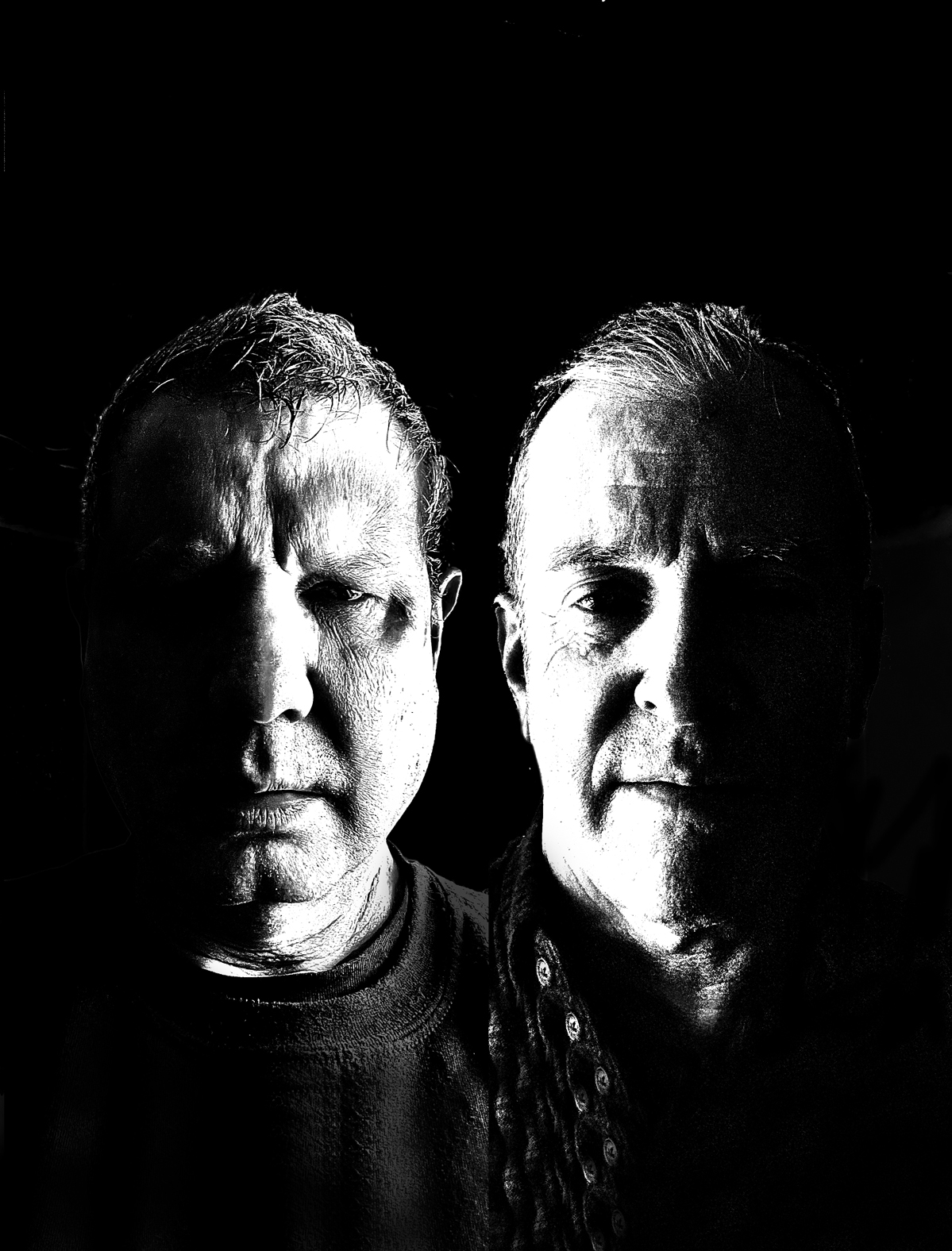
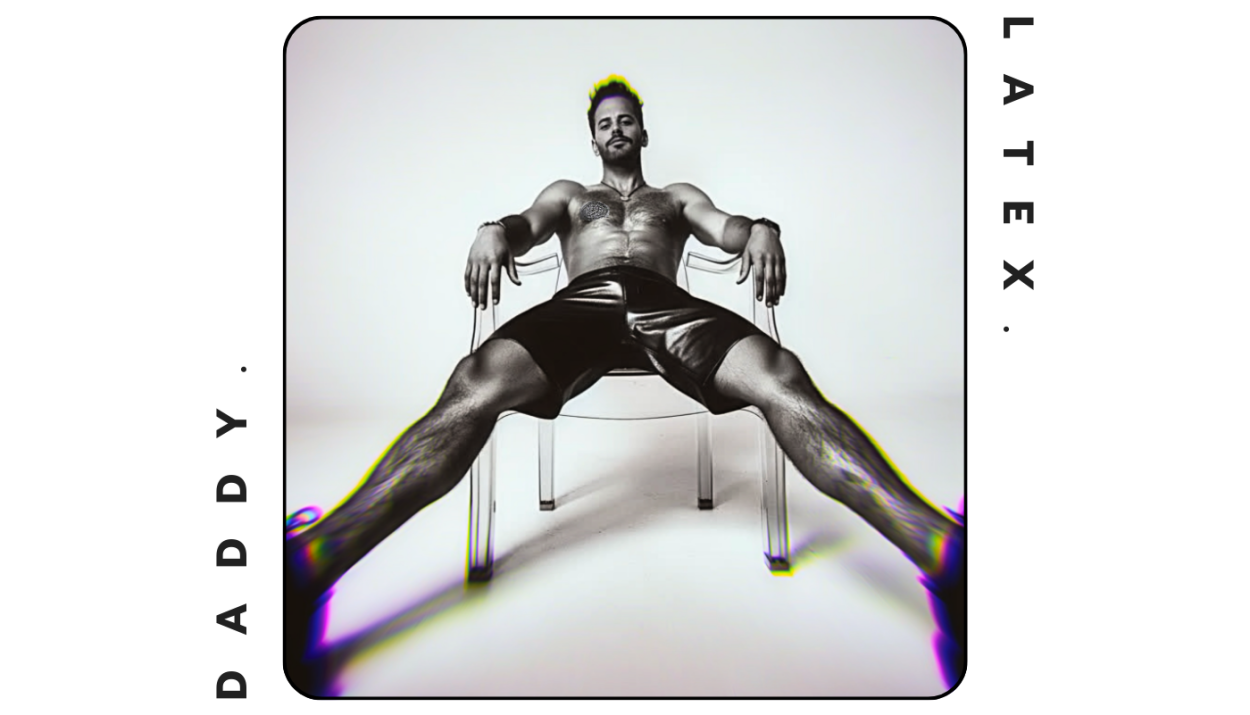

The New Citizen Kane doesn’t just return with an album; he arrives like a vision. Born Kane Michael Luke and now based in London, he embodies the roles of singer, songwriter, producer, and visual artist. He views music not as a product but as a living atmosphere. His work is shaped by contrasts: intimacy and spectacle, memory and movement, heartbreak and heat. He writes as if recalling the future and designs sound as if it has a pulse. With LIQUID.LATEX.DISCO.DADDY., he invites listeners into a world that feels sleek, shadowy, seductive, and fully alive.
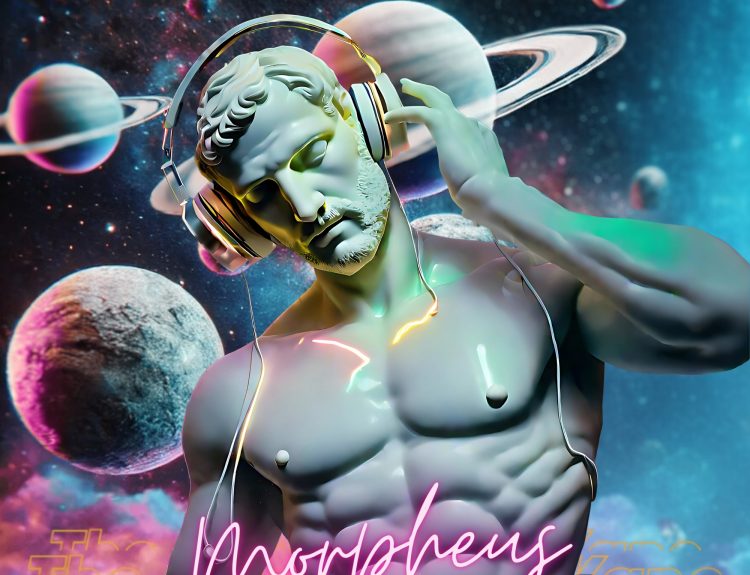
After the emotional sweep of The Tales Of Morpheus, this remix chapter feels more like a dive into a different part of the same dream. If TEMPLE. BEACH. DISCO. DADDY. was a sunlit escape, then LIQUID. LATEX. DISCO. DADDY. presents the after-dark version of that fantasy: wet pavement, flashing lights, bass shaking concrete, and voices blending into the rhythm of the room. This record doesn’t just revisit earlier material; it transforms it into something deeper and more tangible. The songs aren’t just remixed; they are reimagined, as if pulled through a midnight city and returned with edges glowing.
What makes this album engaging is its sense of authorship. These aren’t passive revisions. Each track is fully reworked to exist within one cohesive sonic universe, and that unity is important. The production embraces deep house beats, 90s club vibes, and underground sensuality, but it retains the emotional core that defines Kane’s music. The instrumentation feels elastic and physical: basslines stretch and snap, synths shine like reflections on glass, percussion combines discipline and freedom, and the vocals balance between confession and release. His delivery remains central. He sings as someone who realizes that vulnerability can be glamorous, that desire can be haunting, and that a dance record can also carry the weight of memory.
The opening track, “What’s His Name (featuring Red Man Runs)” sets the tone right away: playful on the surface but with a sharp layer of uncertainty and intrigue. The presence of Red Man Runs adds an extra edge, giving the song a conversational, almost cheeky flow. The theme centers on identity in motion, the thrill of recognition mixed with the haze of a nightclub encounter. Kane’s vocal delivery here is bright yet knowing, never hurried, allowing the hooks to settle with easy confidence. The production likely wraps the voices in a late-night glow, using punchy rhythm and low-end force to establish the album’s darker allure from the beginning.
“(Trip) Unravelling” suggests a descent, a drift, and emotional release. This track feels like the moment the album turns inward, where the dance floor transforms into a space for psychological liberation rather than mere escape. “Unravelling” implies fragility, and the remix likely heightens that tension by surrounding the vocals with restless sounds and swirling electronic movement. Kane’s performance would shine best with a more restrained tone, allowing the song’s emotional unraveling to come through subtly instead of with volume. It captures the struggle of losing form and discovering truth within the disarray.
“Push The Fear Out (Liquid Latex Version)” stands as one of the album’s boldest statements. The title suggests transformation through rhythm: pushing fear away, expelled through movement, sweat, and sound. In its “Liquid Latex” form, the track likely gains a more flexible and powerful vibe, with a groove that refuses to hesitate. Kane’s vocal delivery here needs to sound urgent and insistent, and that urgency is key. The song feels like an anthem of resistance—not politically grand, but a deeply human refusal to freeze in fear. It embodies the act of reclaiming the body from anxiety.
In “Causing A Commotion (Liquid Latex Version),” Kane embraces theatrical mischief. The phrase “causing a commotion” suggests volatility, excitement, and the delightful disruption of being impossible to ignore. The remix allows the song to strut. Expect bold percussion, a tighter club rhythm, and production elements that amplify the song’s sense of movement. Vocally, this track likely thrives on attitude—a knowing grin in the phrasing, a raised eyebrow in the melody. It is one of the album’s most expressive moments, turning charisma into choreography.
“Ratbag Joy (Liquid Latex Version)” feels wonderfully chaotic, and the track seems to embrace that chaos warmly. “Ratbag” suggests messiness, rebellion, and a refusal of neatness, while “joy” keeps it from veering into cynicism. The result is a song celebrating imperfect exuberance, the kind of freedom that arises from being unrefined. Kane’s voice here would benefit from a slightly rougher edge, allowing the song’s character to breathe. The production likely balances grit and brightness, combining rough club textures with euphoric melodies. It honors the beautiful mess of being alive.
“Killer Charisma (Liquid Latex Version)” exudes pure magnetism. “Killer charisma” conveys allure with a bite, charm that can harm, and confidence that hides danger. The remix should sharpen the track into something sleek and predatory, with bass and synth choices that glide instead of stomp. Kane’s performance here works best when cool rather than explosive, letting the song’s seduction emerge through control. The theme revolves around identity as performance, attraction as power, and the unsettling pleasure of being drawn to someone you probably should resist.
Few song titles are as tantalizing as this. “Gotta Secret (Liquid Latex Version)” invites secrets, complicity, and whispered intimacy. In the album’s darker soundscape, it probably turns into one of the most seductive pieces, built on tension instead of release. The vocals might be slightly obscured, woven into the instrumentation as if the song itself speaks from behind a curtain. That choice deepens the sense of mystery. This music is made for close quarters and low light, thriving on what isn’t fully expressed.
“There Goes The Neighbourhood” is one of the album’s most evocative titles. It suggests disruption, transformation, and a hint of anarchic fun. The phrase carries social commentary but also playful arrival as an intrusion. On this album, it likely serves as a scene-setter: the sound of a party taking over the street, the private becoming public, the civilized yielding to the ecstatic. Kane’s vocal style would fit a slightly cinematic delivery here, narrating the collapse of one world and the rise of another. The production likely creates a sense of movement and scale, making the track feel larger than a single space.
“Forget The Trend (with DJ Duty)” presents a manifesto disguised as a dance track. With DJ Duty involved, the song likely acquires a sharper club identity, and the message is crystal clear: style matters more than fashion, feeling matters more than validation. Kane has always seemed interested in authentic emotions wrapped in visual precision, and this song embodies that philosophy. The vocals likely carry a calm authority, while the production emphasizes timeless dance elements instead of anything disposable. It stands as one of the album’s strongest examples of attitude transforming into art.
“Invention (Liquid Latex Version)” hints at reinvention, creativity, and the process of creating something fresh from memory. In remix form, the song probably becomes a statement about the album itself—old emotions rebuilt with new elements. Kane’s delivery here would suit a more reflective tone, allowing the listener to hear both the artistry and the emotions behind the transformation. The instrumentation likely highlights texture, layering, and subtle changes, giving the song a sense of creation unfolding in real time. It feels like the album pauses to admire its own construction.
“Whispering Tango (Liquid Latex Version)” features one of the most cinematic titles on the album. It promises elegance, tension, and flirtation, with “whispering” adding intimacy to the dance. A tango, even in electronic form, carries drama and choreography, aligning perfectly with Kane’s style. The song likely moves with poised intensity, characterized by vocals close to the microphone instead of reaching outward. The production may mix sensual restraint with rhythmic precision, crafting a track that feels like a slow turn under strobe lights. It is romantic but never soft; graceful but charged.
“Well, Damn! Here You Are (Liquid Latex Version)” bursts with personality. It embodies surprise, reunion, and emotional exposure simultaneously. There is humor in it, but also the sting of recognition. The track likely serves as one of the album’s most relatable moments, where the dance floor yields to the shock of an encounter. Kane’s vocal delivery here probably carries a lived-in quality, as if the words arrive with a smile that barely conceals deeper feelings. The production likely maintains a high energy level while letting the emotional hook resonate.
“Boots (Liquid Latex Version)” suggests movement, image, and attitude. It is a title with texture in it; you can almost hear the steps. In this remix context, the song likely becomes percussive and physical, built around rhythmic insistence and a sense of forward motion. Kane’s vocal style here would suit something clipped and confident, matching the track’s likely emphasis on stride and swagger. There is a fashion element to this song, but it never feels empty. It reads as self-possession set to a beat.
“Disco Love (Liquid Latex Version)” is the emotional and thematic center of the album’s title language. “Disco Love” suggests both a genre and a feeling, a celebration of desire through movement and color. In its Liquid Latex version, the track likely becomes darker, more sensual, and more immersive than the title alone suggests. Kane’s performance here probably opens into something expansive, letting melody carry the ache and euphoria together. The production likely glows with synthetic warmth while still keeping the underground edge intact. It feels like the album’s thesis in miniature: love as rhythm, and rhythm as memory.
“Forget The World (Discokane Extended Radio Mix)” reads like the release moment, the point where everything dissolves into pure escape. The “Extended Radio Mix” tag gives it a playful contradiction, as though Kane is both reaching for accessibility and stretching beyond it. The song likely unfolds with a sense of surrender, not as avoidance but as necessary relief. Vocally, it probably offers some of the album’s most openly emotional phrasing, allowing the listener to feel the lift of temporary disappearance. The production would naturally favor propulsion and open space, making the track feel like a horizon rather than a room.
Even with the truncated title, “Heads Are Round (Liquid Latex V)” feels like a closing statement of surreal motion and cyclical thought. “Heads Are Round” suggests the dizzying effect of nightlife, the way repetition and rhythm can alter perception, the way a night out can become a spiral of memory and sensation. As a finale, it likely lands with a sense of psychedelic closure, drawing the album’s themes together in a blur of movement and atmosphere. Kane’s voice here would be strongest if it feels both grounded and untethered, as though he is singing from inside the spinning room itself. The production probably leaves the listener suspended between climax and afterglow, which is exactly where this record wants to live.
“LIQUID.LATEX.DISCO.DADDY.” feels so satisfying because it understands remix culture as re-authoring, not recycling. The album does not dilute the original material; it deepens it. The production is slick but not hollow, tactile but never cluttered. The instrumentation suggests heat, pressure, and motion, while the vocals keep the emotional center intact. Kane’s delivery across the record feels assured and theatrical without becoming detached. He knows how to inhabit a song, and more importantly, how to let a song inhabit a world.
As a body of work, this album reintroduces The New Citizen Kane with confidence and style. It says he is still here, still evolving, still capable of turning confession into spectacle and club language into emotional architecture. His art lives in the borderland between the intimate and the cinematic, and this album makes that border feel electric. The result is not just a return, but a reinvention with lipstick, bass, and a dark room full of light.
I felt drawn in by the mood of it all: the glamour, the pulse, the sadness under the shine, and the sense that every song was carrying a private story beneath its public rhythm. It left me feeling energized, a little wistful, and fully convinced that The New Citizen Kane knows exactly how to turn feeling into form.
Listen to “The Tales of Morpheus” album on Spotify
Follow The New Citizen Kane here for more information