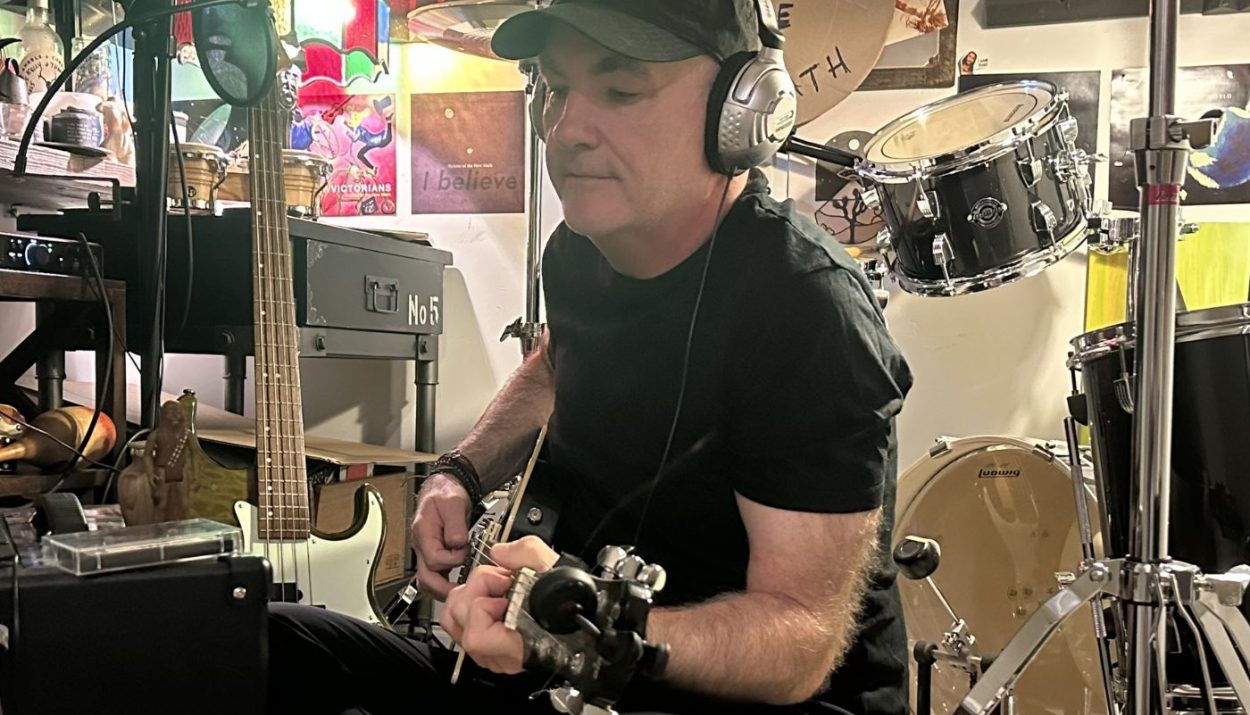

Victims of the New Math deserve a warm welcome. This band does not try to sound larger than life. Their music is human, real, and lived-in. Led by Thomas Young, who handles vocals, guitars, bass, keyboards, and drums, the project feels like a private space where ideas, feelings, and old AM rock dreams have grown for years. Originally a duo with Thomas and his brother Joe, it has turned into a deeply personal rock world. The result is music that feels handmade but never careless, loose in spirit but precise in execution.
Released on May 1, “The Stories That You Weave” is a strong album. It does not stick to one style. It draws from indie rock, lo-fi rock, glam, new wave, and psychedelic influences, yet it still sounds like one voice. The album feels vintage without sounding fake. The riffs are crisp, the melodies warm, and the songs carry sadness and hope. Most importantly, Thomas Young’s vocals give the album its heart. He sings with straightforward honesty that nicely matches the material.
The opening instrumental, “The Run Up,” serves as a doorway into the album’s world. It sets the mood before any lyrics arrive and gives the record a sense of movement right away. It feels like the start of a journey, with the band’s vintage sound and careful playing already established. The performance is clear and focused, showing that this album knows how to create atmosphere before it begins to tell its stories.
The second track, “You’re a Star,” stands out as one of the album’s sharpest songs. It examines fame, exploitation, and the false promise of lasting attention. The line, “When you’re a star, you always are. That’s what they want you to think,” strikes at the song’s heart. It sounds bright on the surface but carries a cold truth underneath. “Until they take what they need” adds a darker tone, while “What will you do, when it all comes down on you” makes the song deeply human. The repeated “Baby, you’re a star” is sweet and sad. Thomas delivers it in a way that transports calmness on the outside but hides turmoil beneath.
“Only in My Dreams” delves into heartbreak and regret. The opening lines, “I thought I knew you. I thought I could see right through you,” create a sense of loss and self-doubt right away. The repeated line “Now you’re only in my dreams” becomes the track’s emotional core. It sounds like grief and acceptance. The song feels quiet and intimate, and Thomas sings it with a control that amplifies the sadness. This is the kind of song that stays in the mind even after it ends.
“Be What You Want” initially sounds like advice, but gradually shifts into a more unsettling song about self-discovery and illusion. The line “Be what you want to be” could suggest freedom, but the song doesn’t stop there. “You won’t find the present by looking in the past” and “Just fleeting satisfaction from the people you deceive” give the track a sharper, more thoughtful edge. It feels like the song questions whether people truly become themselves or construct a story around what they want to hide. The performance is patient and deliberate, which helps the lyrics hit hard.
“Time Flies” is one of the album’s bleakest and most sincere tracks. The repeated “We wanted it that way” feels more like a confession than a defense. The imagery of “gray skies,” “fine ash,” and “lava flows” gives the song a burned-out, almost devastated tone. At the same time, lines like “You pick your poison, but you don’t have to lie” bring a harsh truth to the forefront. The song’s delivery is steady and controlled, enhancing the sense of emotional exhaustion. When “Time flies” repeats, it leaves a heavy aftertaste.
Moving on, “We Can Be Anything” changes the mood without losing the album’s depth. The opening image, “pins and needles and other evils, were dancing on my skin,” is tense and tangible. It feels like pain, fear, and nervous energy all at once. However, the song does not remain in that dark space. The line “We can wash away our sin, clean the slate, begin again” brings hope to the forefront. This balance between discomfort and renewal is one of the album’s strengths. It feels like a song about change that comes after struggle.
The seventh song, “Believe in Me,” feels warmer and more open. It carries a simple yet sincere hope. “Rise and shine to a new day. Put all of your sorrow away” sets the tone right away. The repeated “Believe in me” feels less like a demand and more like a gesture of trust. The song is direct without feeling shallow. Thomas sings it with sincerity, which keeps it from becoming overly sweet. It feels like a genuine hand reaching out rather than a polished pop message.
Now, “It’s You That Wanted More” brings back tension and emotional conflict. The opening line, “I’m feeling like I’m a wave in the ocean. Lost and searching, carried away by the motion,” creates a strong sense of being pulled under. The repeated struggles to “speak,” “see,” and “hear” powerfully depict emotional collapse. The refrain “It’s you that wanted more” sounds pained and accusatory. The shadows, the inner battles, and the sense of losing control all contribute to the song’s intensity and depth.
“Everyday Is Saturday” offers a much-needed lift to the album. It feels warm, easy, and comforting. The lines “Every day feels like Saturday when I’m with you” capture joy straightforwardly. It transforms love into rest, peace, and relief from pressure. The song does not strive to be clever; it just wants to preserve a feeling. This honesty makes it work. It feels like a break in the weather, a small spark of brightness in the middle of the album.
Another instrumental, “The Run Out,” is fitting to this journey. After all the words, emotions, and memories, it allows the album to exhale and fade gracefully. It does not require explanation; it simply lets the mood linger.
But “The Packing List” introduces urgency again. Lines like “We’re running late. Gonna miss the train” establishes the pace immediately. The song embodies motion, stress, and last-minute panic rolled together. The line “We’re just a few steps away” keeps hope alive, but barely. It’s a song about striving to leave something behind before it swamps you. The repetition builds tension, resulting in effective anxiety.
Lastly, “Return to the Universe” stands out as one of the album’s most moving songs. It transforms death into something peaceful and cosmic. The lyrics “And in the end, when I am done, I will return to the universe” are simple but meaningful. And the reassurance in “So you need not cry or say goodbye. I will always be” imparts a gentle spirit to the song. The images of becoming “the sun,” “the wind,” “the rain,” and “the stars” make the track feel larger than one individual’s life. It is reflective, comforting, and quietly beautiful.
Overall, the production and instrumentation are crucial to why this album succeeds. The sound is lo-fi but not weak. It is clean enough to let the riffs and melodies shine while remaining rough enough to retain its handmade charm. The guitars carry much of the emotional depth, the bass adds weight, the keyboards create atmosphere, and the drums maintain a steady rhythm. Because Thomas Young plays so much of the music himself, the album feels closely tied to one creative mind. This connection gives the album unity and uniqueness.
What resonated with me most while listening was the feeling of honesty. “The Stories That You Weave” sounds like a band making music because they have something to express, not to chase a trend. It is reflective, catchy, sad, hopeful, and human. It feels like a collection of songs created with care, memory, and genuine emotion. By the end, I didn’t just listen to an album; I felt as though I had spent time in someone’s inner life, which is what makes it special.
Listen to “The Stories That You Weave” album on Spotify
Follow Victims of the New Math here for more information