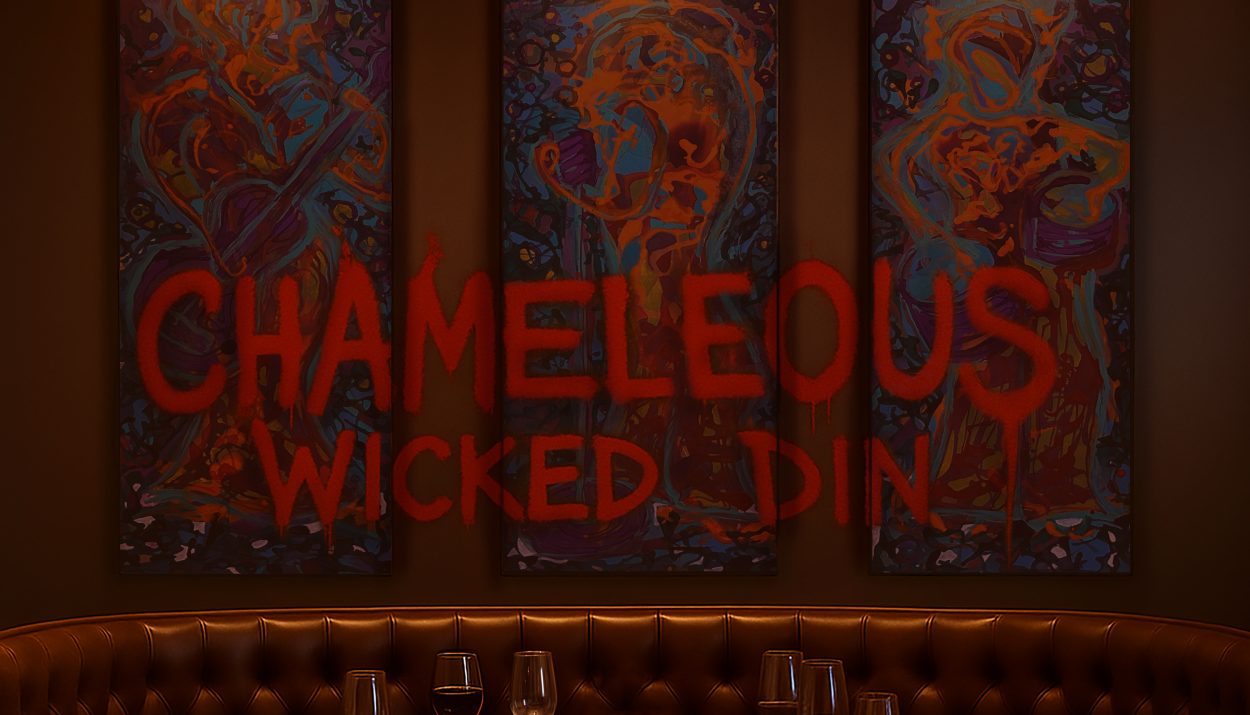

Tennessee has provided a lot of rock music to the world, but Chameleous is different in that it features a six-piece band that approaches rock not as a set of rules but as a living landscape. By combining modern classic rock, Southern swing, psychedelia, roots rock, and jam-band tendencies, the group draws on years of musical experience to produce songs that are melodic, thoughtful, and designed to breathe. The music has a natural, lived-in quality rather than being artificially created.
“Wicked Din” therefore proves to be a very appealing first album. It does not rely on a single mood or a single well-known rock style but covers a range of emotions including desire, loneliness, rebellion, humour, heartbreak, courage and philosophical curiosity, each track having its individuality. The performances have the relaxed quality of experienced musicians who are playing together in the same room, and at the same time the songwriting ensures that the material remains solid and easy to remember.
Opening with “I Knew,” the song moves from a state of temptation to one of courage and friendship; the line “Nothing here to fear, nothing here that we can’t handle” becomes the song’s emotional core, concerned with facing “the darkest past” together. The imagery- “crack the sacred night, take a candle from the moon, and climb a difficult mountain,” gives the writing a mythical quality. The way the vocals are delivered matches the song’s vulnerability by never becoming too forceful, and the band allows the words to rise. The effect is not that of a performance but rather as if a promise is being made in real time.
The second track, “The Beanstalk Speaks,” has a more biting edge and displays a clever intelligence. The story of Jack and the Beanstalk is used as an allegory for greed, power, ambition, and the consequences that follow, thus turning a well-known childhood tale into a much darker one. The line “Big men crave the world, blood for all that’s green” is direct yet does not lose the song’s sly humour, and “Come from an innocent bean, now I’m bigger than dreams” reflects the uneasy change at its core. The repeated phrase “How does that make me mean” intentionally leaves the moral question open. The way the song is performed is effective since it sounds as though it’s being spoken conversationally and knowledgeably rather than in a didactic way.
By means of “Kiss Hello”, Chameleous moves into more unusual and surreal grounds; “black birds” discuss “Nietzsche and annihilation”, ghosts wander between the streetlights, and “crazy diamonds” search the darkness for something to grasp onto. Hidden within this imagery is a very familiar modern anxiety and the dread that nothing might be left to save. Nevertheless, the song does not succumb to despair. “Share a friendly joke and kiss hello” turns out to be a simply wonderful way of responding to a world becoming more and more absurd. The way the vocals are performed reflects the balance between fatigue and hope, and the music accepts the song’s dreamlike quality rather than attempting to make it more conventional.
The title song, “Wicked Din”, shows the album’s more sombre character. The theme of temptation and the desire for what is forbidden is illustrated in a song in which “mission bells tolling to keep out hell” come into contact with neon lights, apple wine, and the offer to “let the red light in”. The repeated bells are like a warning that the characters have deliberately ignored. When the band gets to the line “We’ll recreate our original sin”, surrender has become the aim. The vocals handle this tension effectively, steady enough to maintain the mystery but passionate enough for the temptation to look realistic. Musically, the song is enhanced by an atmospheric setup in which the instruments are just as important as the lyrics, giving it a smoky, late-night appeal.
“Soup A” offers a nice change of temperature. It is playful, flirtatious, and a bit odd, focusing on chemistry rather than making bold declarations. The line “Tell me girl, I want to listen” shows that the singer is more concerned with building a connection than with conquest, while “soup A days, here again” creates a unique little world for the song. The lines “You give me something I can hold on” and “I hope you’re dreamin of some big sin” maintain a sensual and mischievous atmosphere. The vocals suit the song well since they sound relaxed and teasing, and the band provides it with a loose rhythm that allows its odd character to come through.
“Lonely Lady” reduces the emotional intensity and focuses on internal matters. The plea ‘Hold me, lonely lady, save me’ is open and direct, whereas ‘Help me love myself’ shows exactly what the song is dealing with; it is not merely about wanting someone else but about needing closeness at the same time as attempting to recover self-respect. The lines ‘Pull me close, don’t set me free’ and ‘Whisper things, Soft and sweet’ give the song an intimate, nearly whispered character. Because the way the voice is delivered is so important, it works by keeping the emotion just beneath the surface rather than making it into melodrama. The repeated refrain gives the song a hypnotic effect.
“Life Fever” gives the album a bright and eager atmosphere. The song encourages us to look at the everyday world again by asking, “If I told you the story of a bit of string, could you then see all the beauty in such a simple object?” The wonderfully strange refrain, “A mango, a tango, a dose of life fever,” turns philosophy into a fun thing, and the line “Don’t want no cure nor the doctor neither” makes it clear that this kind of fever is one that should be retained. The vocal performance has a brisk and open character, and the band seems particularly at ease in letting the song’s rhythmic and melodic ideas develop freely.
The album ends with the emotionally worn yet deep human track “Unshakable No.” This song presents heartbreak without any romantic embellishment. The question “Does anyone know where broken hearts go to feel at home?” is so powerful precisely because it is so simple, and “Why are we breakable by one unshakeable ‘no'” shows the strange influence that rejection can have on the human spirit. The lines “Everyone’s hurting” and “What the hell’s wrong with me” extend the song beyond a single failed relationship and give it a universal reach. There is real vulnerability in the vocals, and the way it is delivered sounds emotionally genuine rather than staged. As a final track, it leaves a lasting sense of sorrow that matches the album’s broader preoccupation with connection, struggle, and survival.
The reason that “Wicked Din” holds together is that the band is willing to allow opposing ideas to exist alongside one another. The production ensures that the lyrics remain clear and in the forefront, at the same time maintaining the natural atmosphere appropriate for an experienced six-piece group. The instruments have a cooperative rather than a congested feel, the rhythm section offering a solid base while the guitar-based textures and melodic elements provide the arrangements with their character and movement. Equally important is the fact that the performances have a live atmosphere; the vocals do not come across as being separate from the band but rather as being a part of it.
That is indeed what makes the album appealing. Chameleous is not aiming to appear fashionable. Instead, their sound comes across as experienced, curious, full of soul, and willing to embrace a strange idea. Their music can be dark without turning gloomy, philosophical without becoming pretentious, and playful without becoming frivolous. For those people who still think that rock music should tell stories, offer clear grooves, and have a touch of mystery about it, Chameleous have produced an album that is well worth listening to from start to finish.
Listen to the “Wicked Din” album on Spotify
Follow Chameleous here for more information