
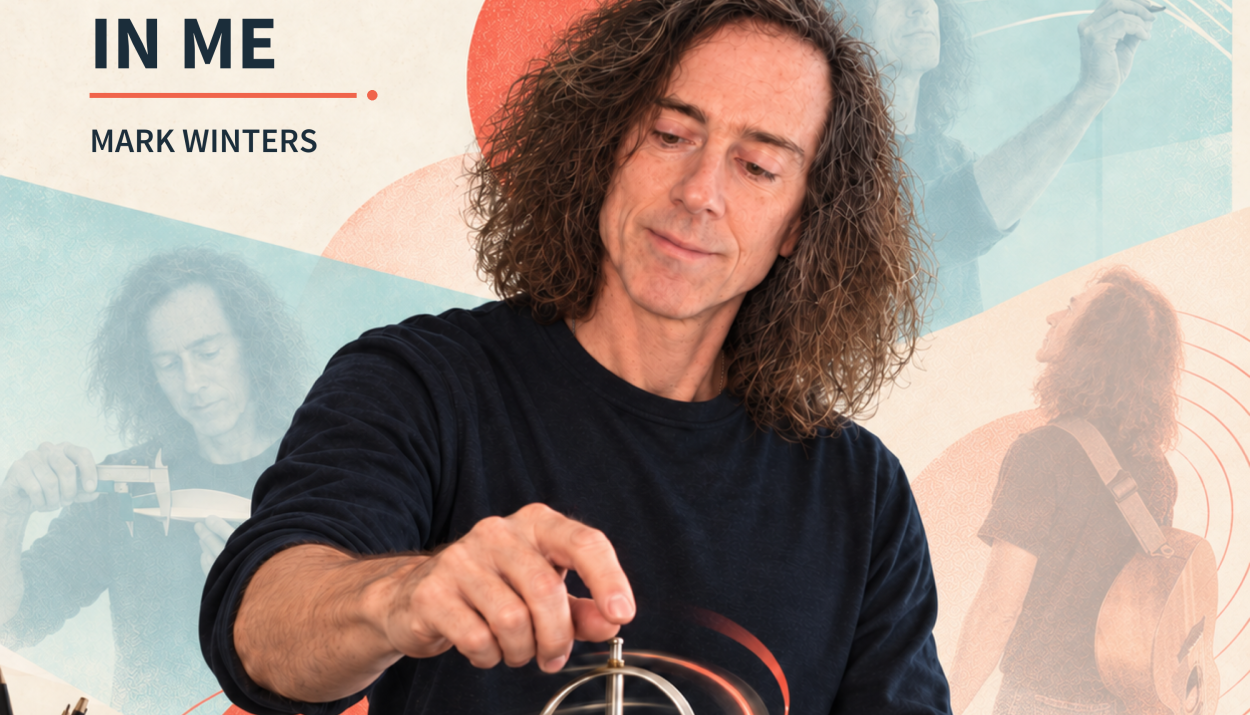

What a joy it is to have Mark Winters back! We’ve missed his refreshing musical spirit, his thoughtful songwriting, and that special ability to make life’s biggest questions feel wonderfully close to home. The Texas-based singer-songwriter, guitarist, poet, and aerospace engineer returns with “The Science In Me,” a ten-track album that reminds us why music is such a powerful meeting place for the heart and mind. Released by Bernoulli Records on October 23, 2026, this is Winters in his element: curious, warm, imaginative, and full of life.
Imagine an artist who looks at the universe through the eyes of an engineer and still finds his greatest inspiration in a loved one’s smile. That is the beauty of Winters. Blending guitar-driven rock, folk-pop, and acoustic warmth, he brings a positive outlook to stories about love, family, loss, personal growth, and human connection. His vocal approach feels personal and approachable, while his songwriting favours honest reflection over unnecessary complexity. The result is music that invites you in rather than talks down to you.
“Can I Rise” opens the album with a deeply personal question about growth and inherited patterns. Co-written with his son Chris Winters, the song explores whether we must repeat the past or find the courage to become something different. Its message is both intimate and universal, carried by the kind of direct, heartfelt delivery that gives Winters’ songwriting its appeal.
“Triangulation,” the album’s focus track, turns a scientific principle into a charming story of attraction. Two people exchange glances across a crowded room, then attempt to locate each other through whispers and confusing echoes. It is a playful metaphor for the uncertainty of connection and the courage it takes to close the distance between two people. With its accessible rock spirit and clever central idea, the song captures the album’s personality perfectly: intelligent without being complicated, romantic without becoming sugary, and optimistic without losing sight of real life.
“Fake Gravity” plays with the idea of forces that pull us in, inviting reflection on attraction, influence, and the difference between what feels powerful and what is genuinely right for us. Produced by Nash Overstreet, the track adds another dimension to the album’s scientific imagination, using an evocative title to explore the invisible pressures that shape our choices.
“Let It Rain” takes a gentler route, moving from grief toward forgiveness and healing. Rather than treating sorrow as something to hide, the song makes room for the difficult feelings that help us grow. Winters’ sincere, unforced delivery suits its emotional weight and allows the theme to breathe and remind us that hope does not require us to deny pain.
“Man In The Sky” widens the album’s perspective, connecting naturally with Winters’ fascination with science, space, and the mysteries beyond everyday life. Its title invites contemplation of our place in a vast universe and the wonder that comes from looking beyond ourselves. It brings a sense of scale to an album otherwise rooted in the close relationships that give life meaning.
“Into The Flow,” co-written with Steven McClintock, celebrates the magical moment when a performer and an audience find the same rhythm. It speaks to music’s remarkable power to dissolve the distance between strangers and turn a room full of individuals into a shared experience. The song’s concept fits Winters’ easygoing performance style and his belief in the energy people create together.
“Velocity” brings motion and momentum into the album’s central conversation. The title suggests the speed at which life changes and the challenge of keeping pace without losing sight of what matters. Within Winters’ wider musical universe, it feels like a natural expression of his engineering mind meeting his human heart: movement is inevitable, but choosing our direction remains important.
“What Does It Mean To Be Human?” is among the album’s most moving ideas. Originally written as a letter to Winters’ late grandmother, Dean C. Winters, his lifelong poetry companion and muse, the song reflects on memory, love, loss, and the bonds that survive absence. In an age increasingly shaped by artificial intelligence, its question feels especially timely. Winters brings a personal history to a much larger conversation, reminding us that our humanity is found not simply in what we know, but in whom we love and how deeply we remember.
“All In The Rhythm” grew from a hike in Zion National Park, when Winters realised he had walked ahead of his wife. That small, recognisable moment becomes a lovely lesson in presence: slow down, share the journey, and remember that the view means more when the people we love are beside us. Its message is beautifully simple, capturing the everyday wisdom that makes Winters’ songs so relatable.
“Speed of Light,” the closing bonus track, brings the album to its natural finish with a title that echoes the record’s fascination with motion, distance, and discovery. Produced by John Edward Ross, it leaves the listener with a final reminder of the relationship between scientific wonder and human experience. As a closing statement, it feels fitting for an album that repeatedly looks outward at the universe while finding its deepest meaning in the heart.
Production helps hold these varied stories together. Eight tracks, including “Triangulation,” were co-produced by John Edward Ross and Michael Shanks, while Nash Overstreet produced “Fake Gravity” and Ross handled “Speed of Light.” Across its rock, folk-pop, and acoustic influences, the album’s musical identity centres on guitar-driven songwriting and an inviting, accessible spirit. Its appeal lies in serving the songs rather than overwhelming them. The arrangements give the record room to move between playful ideas and more vulnerable reflections, while Winters’ personable vocal delivery keeps the storytelling at the forefront.
Overall, “The Science In Me” is more than a clever album title. It captures the contrast and connection between two parts of Mark Winters: the engineer who searches for patterns in the universe and the songwriter who finds meaning in the people around him. His songs offer no complicated formula for living well. Instead, they encourage us to listen, forgive, grow, slow down, and reach for one another.
To Mark, it is genuinely good to have you back. We have missed your positive spirit, your thoughtful words, and how you turn everyday moments into meaningful songs. With “The Science In Me,” you offer an invitation to slow down, look around, ask better questions, and love a little more openly. That is a welcome return, and one worth celebrating. Thank you!
Listen to “The Science In Me” album on Spotify.
Follow Mark Winters here for more information.
TikTok
YouTube