
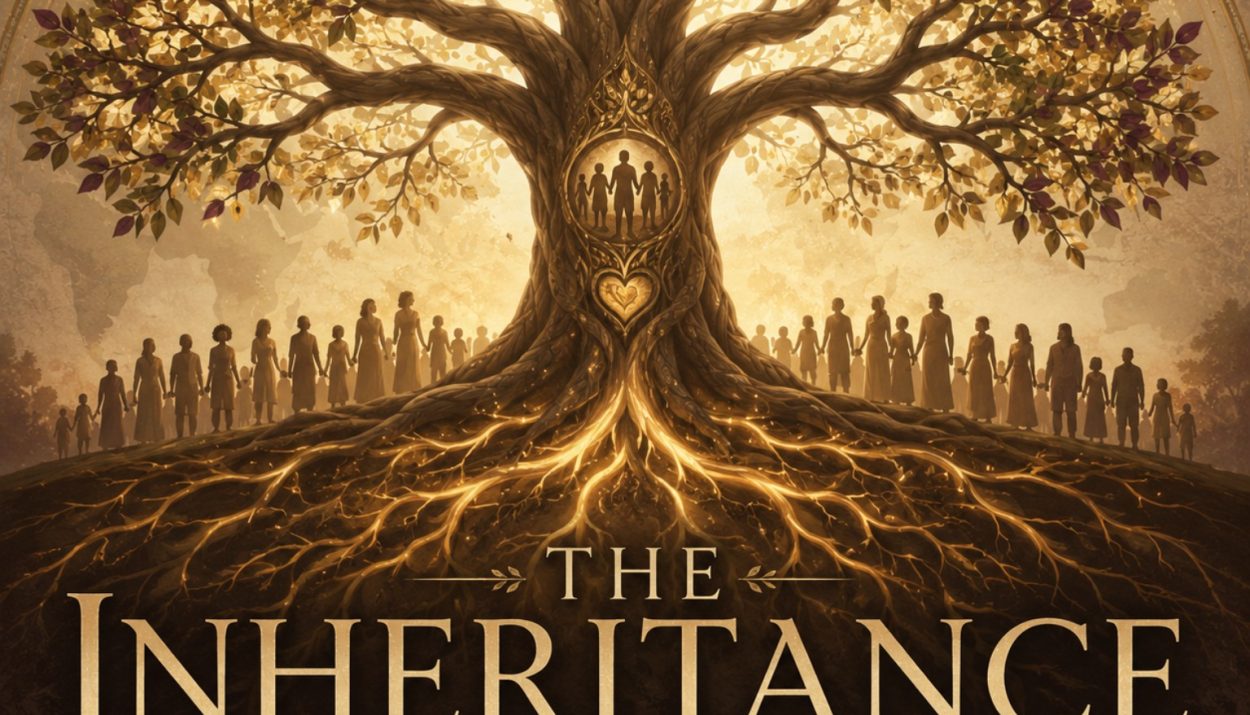

Keesha Blair has the ability to make music seem like a conversation you never realised you’d needed. Through her company Divine Purpose Music, she produces songs that combine healing, truth, boundaries, empowerment, and emotional restoration, with the message always taking the lead. I have come to value her work because it doesn’t pursue noise or showiness; instead, it seeks meaning. “The Inheritance” might be her most delicate reminder so far that what genuinely enriches a life is usually impossible to put a price on.
The song, based on the line “We all add to the pot,” gives the idea of inheritance a meaning that goes well beyond money, property, or possessions. Drawing inspiration from her mother and grandmother, Blair transforms her personal sorrow into a broader reflection on love, wisdom, courage, compassion, and influence. The lines “Some riches can’t be counted. Some wealth has no set price” beautifully express the song’s importance, and “I honor you through gratitude. And what I choose to leave” gives the message genuine emotional depth. It is not just a song about remembering the people who came before us; it is about realizing that all of us are only temporary stewards of something greater than ourselves.
Blair’s way of singing matches perfectly with this approach to messaging. Rather than aiming for showiness, the performance emphasizes intimacy, and the words are delivered with the calm self-assurance of someone drawing on personal experience. The way she performs is effective when dealing with moments of vulnerability, for example, in saying, “I don’t want to disappoint you, with all you’ve placed in my care.” Instead of turning the emotion into melodrama, the song proceeds towards reassurance and relief: “We never had to prove. We were worthy to receive.” This balance is what gives it its quiet strength.
Musically, the song functions effectively as a form of emotional structure since the musical arrangement enhances the lyrics rather than clash with them. The production and the choice of instruments have their greatest impact when they provide space for the vocal performance, enabling the repeated refrain to take on a nearly communal character, as if it were being passed on from one generation to the next. Instead of viewing the production as just decorative, Blair’s approach treats the music as serving the message, and that is precisely where this song should be.
What gives “The Inheritance” its uniqueness is the fact that Blair takes a highly personal narrative and extends it to become something we can identify with. The outstanding move in the song is the line “Universal family tree, every leaf, a legacy”: at this point, Grandma and Mama are linked to strangers, to ancestors, to future generations, and to all those people who have ever influenced another person’s life without ever having known them. Here, Keesha Blair is not a songwriter or a music producer, but a storyteller of emotional inheritance — someone who is using modern techniques, such as AI-assisted production and vocal generation, to pass on enduring human truths. And maybe the most valuable inheritance that this song leaves us with is that the question is no longer just about what we have received, but about what we will decide to leave behind.
Listen to “The Inheritance” on Spotify
Follow Keesha Blair here for more information