
Saakeli is an artist who does not just make songs; he creates places. His music feels like discovering a forgotten room in an old house that somehow holds your memories. With one foot in strange imaginary landscapes and the other grounded in everyday human struggles, he builds a world where the unusual and the ordinary coexist.
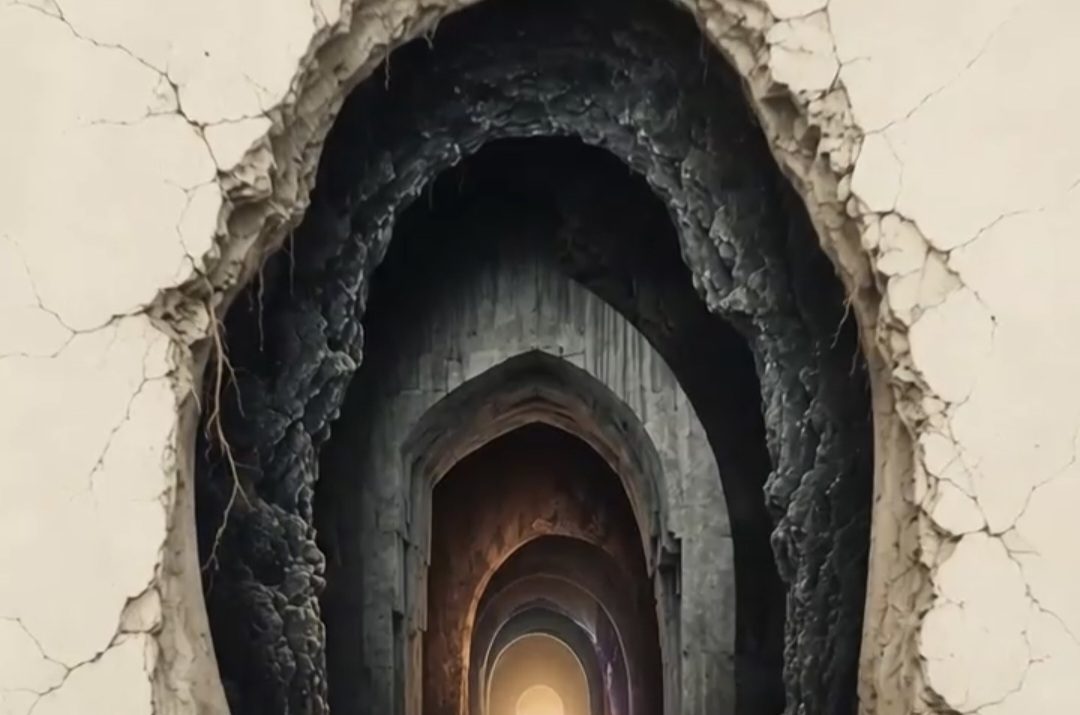
In “Different Kinds of Caves,” Saakeli shares a concept album focused on spaces, including physical spaces, emotional spaces, and the invisible rooms people carry within themselves. Each song serves as its own environment, a distinct cave, chamber, or hidden corner of the mind. Instead of telling a straightforward story, the album invites us on a journey through memories, machines, fears, dreams, and unexpected beauty. Saakeli’s greatest asset is his imagination. He crafts music that feels like a collection of strange postcards from places that don’t exist but feel familiar. Let’s take a look at each track.
The album starts like a doorway slowly opening. “The Entrance” sets the mood with patience and mystery, inviting you into Saakeli’s unique universe. It feels more like crossing a threshold into another state of mind than just an introduction. The production evokes discovery, with carefully chosen sounds enhancing the sense of entering a forgotten underground world.
“Surface Level” examines the gap between what people show and what they conceal. This track reflects on modern life, where appearances often mask deeper emotions. His performance feels thoughtful rather than dramatic, making the song’s message even more powerful.
“Soft Corners” introduces a warmer, more comforting space, resembling a room where someone can finally relax. The song captures the small havens of safety people create for themselves. The instrumentation has a gentle quality.
“Sky Bunkers” presents a fascinating contradiction: a place that feels protective and impossible. The track explores themes of isolation, imagination, and the construction of emotional shelters. The electronic elements create a floating atmosphere, while the performance adds curiosity and wonder.
Meaning “without fear,” “Sans Peur” has a different energy. It feels like a moment of courage within the album’s broader journey—saakeli balances vulnerability with confidence, delivering the track with calm strength. The production creates space around the singer’s vocals, allowing the emotion to breathe.
“Spireworks” feels like a tall, strange structure made of sound. The track rises through layers of electronic textures and unique arrangements. It highlights Saakeli’s talent for creating environments instead of just writing melodies. His performance blends seamlessly into the changing landscape, becoming another instrument within the composition.
“Stacks” explores ideas of accumulation: memories, objects, information, and everything people gather throughout life. The song reflects on modern existence and the burden of what surrounds us. Its rhythmic qualities and detailed production create a mechanical feeling, matching the themes of systems and repetition.
After the darker and more crowded areas of the album, “The Clearing” feels like stepping outside to see open sky. It symbolizes relief, understanding, and a moment of peace. The arrangement feels spacious and emotional, showcasing Saakeli’s skill for creating atmosphere through simplicity.
One of the album’s most imaginative titles brings one of its most playful ideas. “A Nice Place For Witches” feels like a strange fairy tale blended with everyday reality. Saakeli embraces humor and mystery, showing that unusual concepts can still carry emotional weight. There’s a charming awkwardness in this song that makes it stand out.
“Conduit” serves as a connection point between people, machines, memories, and emotions. The production creates a sense of movement and transmission, almost like signals traveling through hidden spaces.
“Small Machines” looks at the relationship between humans and the little systems that shape daily life. It captures the beauty and sadness of repetition. The instrumentation constructs a mechanical world, reminding listeners that humanity exists even within routines.
“Important Announcement” feels like a surreal interruption, almost as if it were a message from another reality. It plays with the concept of information, attention, and the odd ways people communicate. The delivery gives the song personality, mixing seriousness with a dash of absurdity.
“There Was This Man” feels like a memory being gently unfolded. It carries a storytelling quality, with the narrator describing a person and a moment. The performance is natural and emotionally direct, making listeners curious about the story behind the song.
“Kill Screen” brings a darker, more digital vibe. The title suggests endings, games, repetition, and the feeling of being trapped in systems. The production mirrors this idea with electronic textures and a tense atmosphere.
After so many unusual and complex spaces, “Love” feels like a simple but powerful room. The song highlights one of the most human experiences: connection. Saakeli does not complicate the emotion. Instead, he allows warmth and honesty to lead.
The album concludes with “The Exit (Sand and Sun),” a beautiful final stop after the extended exploration. It feels like leaving the caves behind and returning to the open world, changed by the journey. The track expresses acceptance and quiet hope, closing the album with a sense of release.
The vocals are a defining feature of the album. The delivery feels fragile, conversational, distant, humorous, or deeply emotional, depending on the room Saakeli creates. The beauty of the performance comes from its honesty. They sound like someone thinking out loud, remembering, questioning, and searching. That human quality gives the album its emotional core.
The production on “Different Kinds of Caves” is imaginative and detailed. The album flows easily between ambient music, trip-hop, jazz influences, electronic textures, spoken word, and unconventional pop structures. Each track has its identity, yet the production keeps everything connected through a strong sense of space. The instrumentation is carefully crafted, with atmospheric synths, electronic rhythms, textured sound layers, and touches of organic warmth working together. The album does not use sounds merely for decoration; every choice supports the emotional landscape of each song. The greatest accomplishment of the production is how alive these songs feel. You can touch the environments Saakeli creates. The music has walls, corners, shadows, and windows. It feels like exploring a real place.
“Different Kinds of Caves” is a deeply creative and emotionally honest album from an artist who understands that life is full of strange rooms. Saakeli transforms ordinary experiences into unusual landscapes and turns personal feelings into shared journeys. This music appeals to those who enjoy discovery and those who seek albums that unveil new details with each listen.
Listen to the “Different Kinds of Caves” album on Spotify
Subscribe to Saakeli YouTube