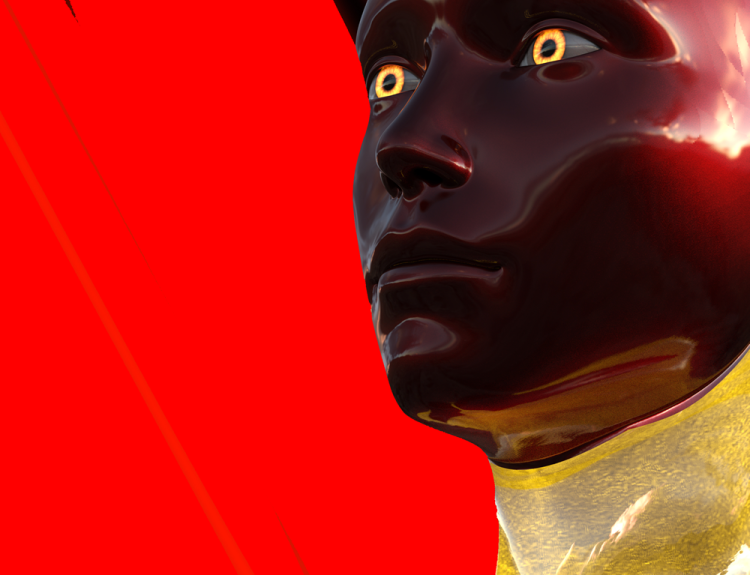


A fresh voice has now entered the Australian independent music scene, bringing with it far more than just songs. Evahfar is the creative base for Stephen Murray, a musician and vocalist as well as a multi-instrumentalist, who, in writing, singing, playing, recording, producing, and shaping each element of his music, shows a remarkable degree of independence. The self-titled EP, which was released on August 1, 2026, has the character of a personal statement—raw enough to appear human, polished enough to attract attention, and adventurous enough to escape easy categorisation.
The album was entirely recorded in Murray’s home studio and is based on a strong do-it-yourself attitude; alt-rock guitars, bass, drums, atmospheric textures, and expressive vocals all come together in a way that reflects the central themes of the EP regarding growth, self-discovery, memory, and going beyond familiar boundaries.
The EP makes its first impression with this clear statement. “SEER-sha” sets listeners going with rhythmic guitars, bass, and drums, after which Murray’s voice enters with a haunting and almost otherworldly quality. The melodic moans and emotional delivery he uses bring to mind the sense of freedom and vulnerability linked with Jeff Buckley, yet still sound completely like him. As Happy Mag put it, the song takes listeners into “hypnotic madness”. The lyrics enhance that effect. Lines such as “Ocean by the moon, aquamarine with shadows” and “Voyage of the night, seven stars above” form a beautiful cosmic scene. The repeated “SEER-sha” has the feel of an invocation, maybe referring to a sacred place, maybe to a distant world, or perhaps something buried deep within the singer himself. It is an appealing opening since it doesn’t explain everything; it just draws you in.
“Pink Goddess” reduces the emotional intensity and goes even further in embracing mystery; the song has the sensation of hovering between memory and imagination, and falling shadows, a crescent moon, and a rising tide all contribute to a dreamy feeling of movement. The poignant phrase “Pink goddess rides the waves of time” is what gives the song its mythical core. The references to the “underworld, outer-world, inner-world” make the song seem like a journey through various states of consciousness. Murray’s way of delivering the song is particularly effective in this instance, ensuring that the performance remains intimate and smooth rather than overdone.
The song “Vines” has a warm and forward-moving quality; the images of ‘vines’ stretching from the sky down to the earth, of city lights and neon glow, and of dreams mirrored in the night all create a strong sense of possibility. The lines “calling, brave the wild, walk the distance, far” fully capture the spirit of the EP. It is a song concerning persistence and the decision to show courage even when the path is unclear. Murray combines the song’s reflective aspect with an energetic performance, which makes the music personal and uplifting.
“Chalo” provides a nice change of tempo. Since it is an instrumental piece featuring an expressive vocalization, it shows that Murray is able to convey his message without depending on traditional lyrics. The vocal part acts as a further instrument, conveying emotion through tone, breath, melody, and atmosphere. Positioned at this stage in the EP, “Chalo” has the effect of almost being a moment of relief, a break from words during which the feeling itself takes control. Moreover, it brings out Murray’s musical intuition and his confidence in allowing the sound to speak for itself.
The final track ends the EP on a more sombre yet still ultimately hopeful note. In “Shadow Falls,” there is a sense of storm, tension, and light; the lines “Storm breaks free forever tonight” and “Gather us now under this, bright silver shine” contribute to a cinematic atmosphere. The repeated lines, “Shadow falls,” give the song a strong impact, while “bring the sun we need the light” brings in a message of hope without diminishing the darkness that had come before. Murray sings the song with determination, contrasting shadow and light as the song’s emotional focus.
In all five of the tracks, Murray’s most notable feature is his voice; he is able to transport a fragile, soulful, distant, powerful, and almost primal tone all at the same time. His way of phrasing is seldom predictable, and his vocal performances give the music character without appearing to be merely decorative. Likewise impressive is his musical ability: each instrument contributes to the atmosphere, whether it be in the driving rhythm section, the restless guitars, or the spacious atmospheric sections.
The album has the same balance; it was recorded at home and produced by Murray himself, so it has a certain rawness but doesn’t seem incomplete. On the contrary, this rawness contributes to the emotional authenticity of the recordings. The EP is the sound of a single person pursuing a vision without making any compromises.
Evahfar is a remarkable debut offering from Stephen Murray, who is a courageous and self-reliant musician with a clear sense of atmosphere, melody, and the ability to tell emotional stories. Rather than producing just a first EP, he has opened the way into his own musical world. Evahfar should be listened to, recalled, and welcomed with full attention.
Listen to the “Evahfar” EP on Spotify
Follow Evahfar here for more information