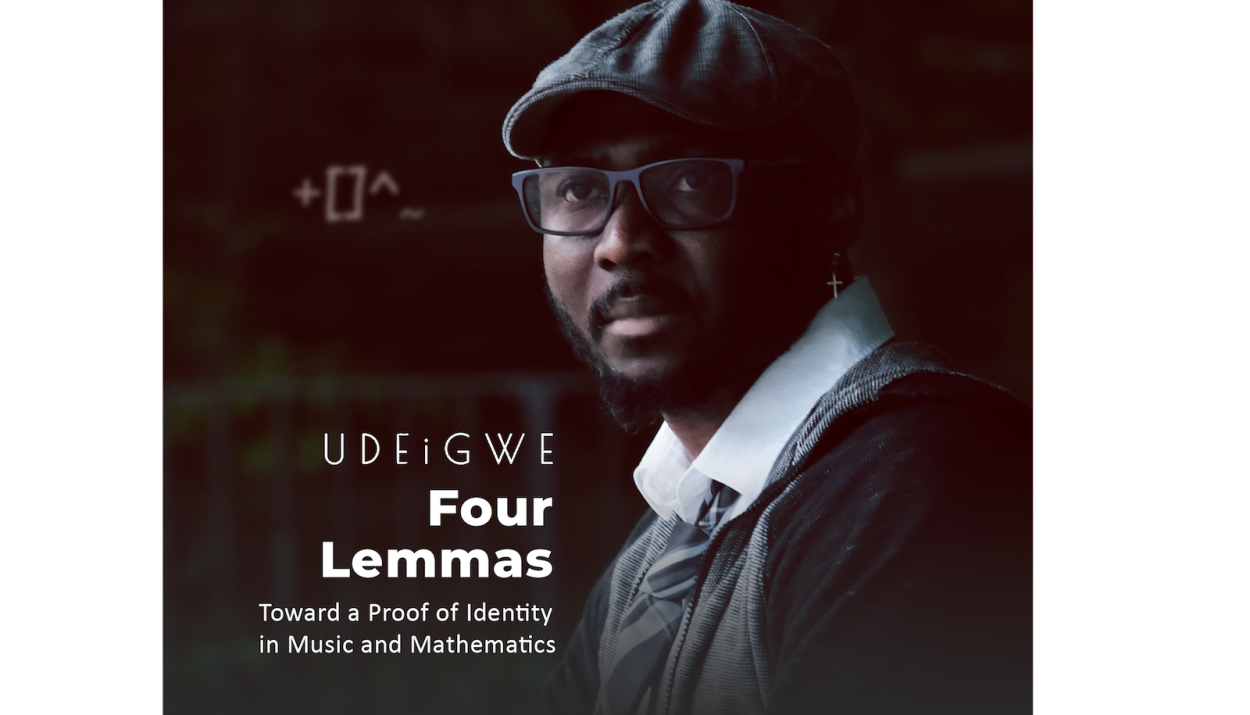

UDEiGWE has released a smart and warm album. Titled ‘Four Lemmas,’ this is not just another jazz album; it is a complete artistic statement. It unfolds with a calm focus, infused with soul, memory, and emotion. Through spoken word, modern jazz, cinematic elements, and West African rhythms, UDEiGWE creates a personal, reflective, and profoundly human world. Released on May 1, this album introduces us to an artist with a clear voice and bold vision. UDEiGWE does not lead listeners into complexity just for the sake of it. He welcomes us into a space where ideas carry emotion, where logic can be beautiful, and where music balances thought with feeling. That is a rare gift.
The opening track, ‘Prologue: Four Lemmas’, acts as an invitation and sets the tone purposefully. It feels as if the album is opening a door and directly addressing us. The spoken-word element adds a personal, thoughtful touch, while the music provides a gentle yet steady frame. As an opener, it fulfills its role by preparing us for a record that values meaning, pacing, and emotional control. It is not rushed; it confidently introduces the album’s world.
“Lemma I: Orthogonality” suggests separation and clear relationships between ideas. This theme makes perfect sense for a jazz album focused on identity and structure. This track explores directing life while maintaining one’s shape. Musically, it embraces contrast: voice against piano, melody against rhythm, movement against stillness. The song is clear and balanced, displaying modern jazz with enough space for the listener to absorb each phrase. It is one of the more intellectually shaped pieces and emotionally revealing, as distance often teaches us about ourselves.
The third track, ‘Corollary I: I Don’t Care,’ has an attitude, but in UDEiGWE’s hands, it implies more than mere defiance. It feels like a declaration of freedom and self-protection, offering release from external pressures. It stands out as one of the album’s direct and memorable songs. The corollary format is significant, suggesting this track emerges naturally from the first lemma, like a personal truth that follows understanding its underlying structure. Musically, it introduces a stronger groove, a relaxed swing, and a sharper vocal delivery. Its emotional message is straightforward: independence can be calm, firm, and final rather than just loud.
“Lemma II: Sparse Matrix” features a striking title that hints at space, pattern, and hidden order. A sparse matrix embodies structure even in its emptiness, serving as a perfect metaphor for control in music and life. This track sees UDEiGWE immersing himself in the blend of intellect and emotion. It uses silence as carefully as sound, showcasing confidence. In performance, the vocals gently fit within the arrangement, allowing room for reflection. This is one of the album’s most elegant and thoughtful compositions.
“Corollary II: LU Principle” suggests a strong sense of process, order, and problem-solving. Musically, “LU Principle” may symbolize finding the right path through complexity without forcing answers. As a song, it might embody insight, becoming more rhythmic or harmonically rich, illustrating how structure can lead to freedom instead of constraining it. Here, UDEiGWE’s dual identity as a musician and mathematician feels especially natural. The music can move purposefully, while the vocal phrasing remains smooth and human, capturing the feeling of arriving at understanding through effort. This makes it one of the album’s most satisfying moments.
“Lemma III: Local Maximum” hints at a peak feeling within a larger journey. It suggests a high point, but not the final destination. This is a beautiful concept for a song, symbolizing success, confidence, joy, or even the fleeting sense of alignment. In an album focused on ambition and emotional balance, this track serves as a powerful center. Musically, it opens up more than earlier songs, feeling fuller, with stronger dynamic movement and more assured vocal placement. The title also indicates that growth isn’t solely about reaching a final answer, but recognizing the peak from which you stand.
“Corollary III: Pose FM” is playful, unique, and modern. It feels like a broadcast from an inner world, where identity is performed, shaped, and shared. This is one of the most conceptually rich songs, blending ideas of image, signal, and self-expression. It’s also one of the most interesting tracks in terms of delivery, with a title suggesting a tonal shift. There may be more spoken-word textures or a more stylized vocal approach. This song likely examines how we present ourselves to others and how much of that is genuine. This adds a rich emotional and social layer.
The closing track signals an arrival. Titled ‘Lemma IV: Stable Equilibrium,’ it provides a strong conclusion, suggesting balance instead of perfection. This wiser, more human goal aligns beautifully with the album’s broader message: life is not about remaining fixed but about achieving a state where motion and peace coexist. As a final track, it compiles the album’s themes into a unified close. The vocals sound settled and assured, while the instrumentation feels spacious, reflective, and open. The ending leaves you with a sense of calm understanding rather than dramatic closure. That suits a record built on thought, emotion, and structure.
UDEiGWE’s vocals are one of the album’s standout features. His delivery carries authority and softness, a difficult balance to achieve. He sounds like someone who knows his craft and when to let the words breathe. This balance is important for an album incorporating spoken-word elements and complex ideas. His performance style appears thoughtful rather than flashy, adding to the album’s charm. He doesn’t overwhelm listeners but draws them in. His phrasing likely feels clear, measured, and emotionally honest. When singing, his voice probably radiates warmth and control. When speaking, it conveys intimacy and grounding. This combination creates a human center for the album. His delivery feels authentic; he sounds like an artist who respects silence, trusts the narrative, and believes in the listener. This honesty fosters a genuine connection.
The production of ‘Four Lemmas’ serves the songs rather than competing with them. That is a wise choice. An album with such depth requires polished sound design without clutter. The blend of modern jazz, cinematic atmosphere, soulful melody, and reflective narration suggests a clean, spacious, and carefully crafted production style. The instrumentation plays a vital role in defining the album. Piano, in particular, probably acts as both a harmonic base and storytelling instrument. Jazz textures add movement and color, while soul influences provide warmth. West African rhythms enhance depth and grounding.
Thanks to its deep thinking with clear expression, “Four Lemmas” stands out. It is intellectual without being distant, artistic without being vague, and structured without being rigid. UDEiGWE has crafted a personal, modern, and meaningful work from beginning to end. He deserves a warm response that reflects the depth of this achievement. To put it, this is an album with heart, shape, and purpose. It sounds like poetry and moves like thought.
Listen to the “Four Lemmas” album on Spotify.
Follow UDEiGWE here for more information.