
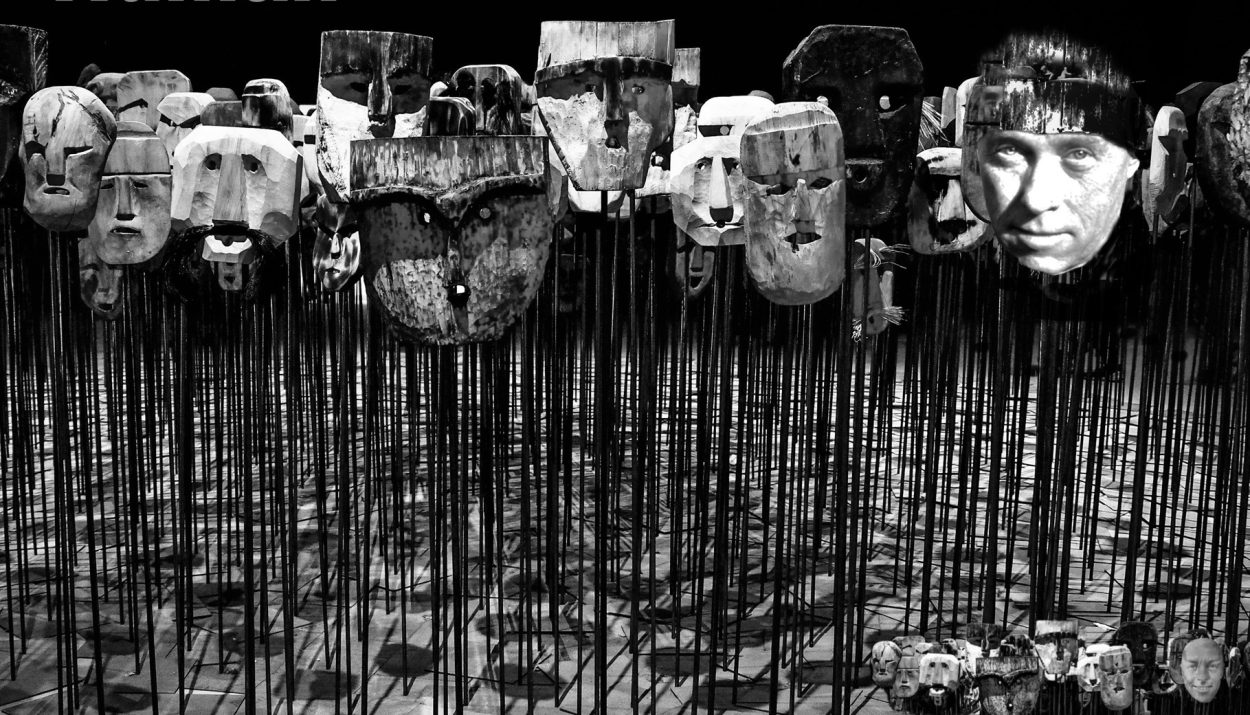

Some artists slip into the room and then, with a single exhale, rearrange the air. OneNamedPeter is one of the few. An artist who builds entire worlds with his two hands, he’s a British singer-songwriter, multi-instrumentalist, producer, designer, filmmaker, and quiet sonic architect, who blurs the line between musician and maker-of-universes. Every note, every color, every image, every idea is his. And “Passing for Human,” his seventh album, released on November 21, feels like the moment the world he’s been carving out cracks open.
Three years after Pan, he thought the muse had left him. But she returned in a rush—feral, electric, and insistent, and the songs here sound like they were caught mid-flight, still warm from creation. This is an album that feels alive. Listening to it, I felt something rare: the sense that an artist is not trying to impress you but trying to tell you the truth. Below is a track-by-track walk of this beautifully unclassifiable record. Keep reading my thoughts.
The album opens with a riff-driven surge—gritty guitar, muscular rhythm, and vocals that sound both weathered and hopeful. There’s a spiritual restlessness in “Go Down to the River,” a desire to dive into something cleansing and elemental. Peter’s delivery is urgent, almost conversational, as if he’s narrating a journey he has to take.
“The Ghost of You” moves inward, tracing the residue of someone who is gone but still haunting the periphery. The production becomes more spacious, more intimate. His voice is tender with a kind of remembered ache; there’s a beautiful restraint in the way he doesn’t oversing the emotion. The instrumentation feels like fragile glass—soft percussion, minimal harmony—letting the vocal cracks tell the story.
“Passing for Human,” the title track, is a meditation on alienation that feels startlingly relatable. It builds slowly, layering subtle electronic textures beneath a quiet acoustic framework. Peter’s voice here is almost confessional, offering vulnerability without dramatics. It’s a portrait of someone wondering if they fit anywhere—and somehow making that uncertainty sound beautiful.
The fourth song, “Hometown,” is a warm but complicated look back at the places that shape us. The guitars brighten, the tempo slows, but there’s still a bittersweetness woven through. Peter’s delivery carries a smile that doesn’t quite hide the shadow behind it. The production adds small details that give the track movement without clutter.
“Flying” is the album at its most buoyant. A sense of freedom lifts the melody upward, and the arrangement blooms with warm and glassy guitar lines. Peter’s vocals take on a clearer, smoother tone here—less earth, more sky. Listening to it feels like looking down at your life from 30,000 feet.
The emotional centerpiece of the album “Never Cry Again” is a vow, a plea, and a promise wrapped in a melody that feels bruised but resilient. The production is understated: acoustic guitar, a gentle bass heartbeat, and harmonies that hover like a hand on your shoulder. His vocal delivery cracks in just the right places; it’s quietly devastating.
In “Skytherapy,” we meet Peter at his most stripped-back. A bare acoustic guitar, almost no adornment, and a vocal performance full of contemplative openness. This track feels like a journal entry left on the kitchen table—raw, simple, and real. The lyrics suggest healing through openness, through looking upward and outward.
A welcome burst of energy, there’s swagger in “Look At Me Go,” and an undercurrent of self-realization, even celebration. The guitars get bolder, the rhythm sharper, and Peter’s vocals lean into a playful confidence. The mix lets everything breathe, making the momentum infectious.
A reflective, almost cinematic piece built around curiosity and unfinished emotional business. The synth undercurrents and gentle percussion in “What Are You Doing Now?” create a dusk-colored atmosphere. Peter’s voice softens into something conversational and contemplative. It’s the kind of song that feels like looking out of a train window at night.
The last song, “While You Sleep,” is a tender lullaby to close the album with light, hushed, and full of quiet affection. The instrumentation circles around delicate guitar and soft pads, giving it a cradle-like warmth. Peter sings here with absolute emotional clarity; he doesn’t push or force. He simply offers. It’s a perfect, gentle exhale at the end of a deeply human journey.
OneNamedPeter’s voice is not about acrobatics; it’s about honesty. His delivery shifts seamlessly from gritty urgency to soft confession. There are moments where the vulnerability in his tone feels almost intrusive, as though you’re listening to someone think aloud. He performs his songs like someone who trusts the listener, and that trust is disarming.
The production across the album is coherent yet varied. Peter draws from multiple sonic palettes—folk, art-rock, alt-pop, and ambient textures—yet nothing feels mismatched. The throughline is intention: every sound serves the song. The guitars often act as emotional narrators. The percussion is carefully measured. The synths, when used, are atmospheric rather than ornamental. You can tell the album was crafted by one person; it has the fingerprint of a singular vision.
The experience of hearing “Passing for Human” in full is like reading a handwritten letter instead of a printed one. It feels personal and lived-in. I found myself leaning in to catch small details—a shift in vocal breath, a subtle chord change, a lyric that lands like a sigh. It’s the rare kind of album that doesn’t demand your attention but earns it quietly, track by track, until you realize you’ve been fully drawn into its world.
“Passing for Human” isn’t just an album but an invitation. A warm, questioning, beautifully honest look at what it means to feel human at all. And OneNamedPeter, in all his multidisciplinary, genre-defying creativity, deserves a place among the modern singer-songwriters who treat music not as a product but as a craft.
Listen to the “Passing For Human” album on Spotify
Follow OneNamedPeter here for more information