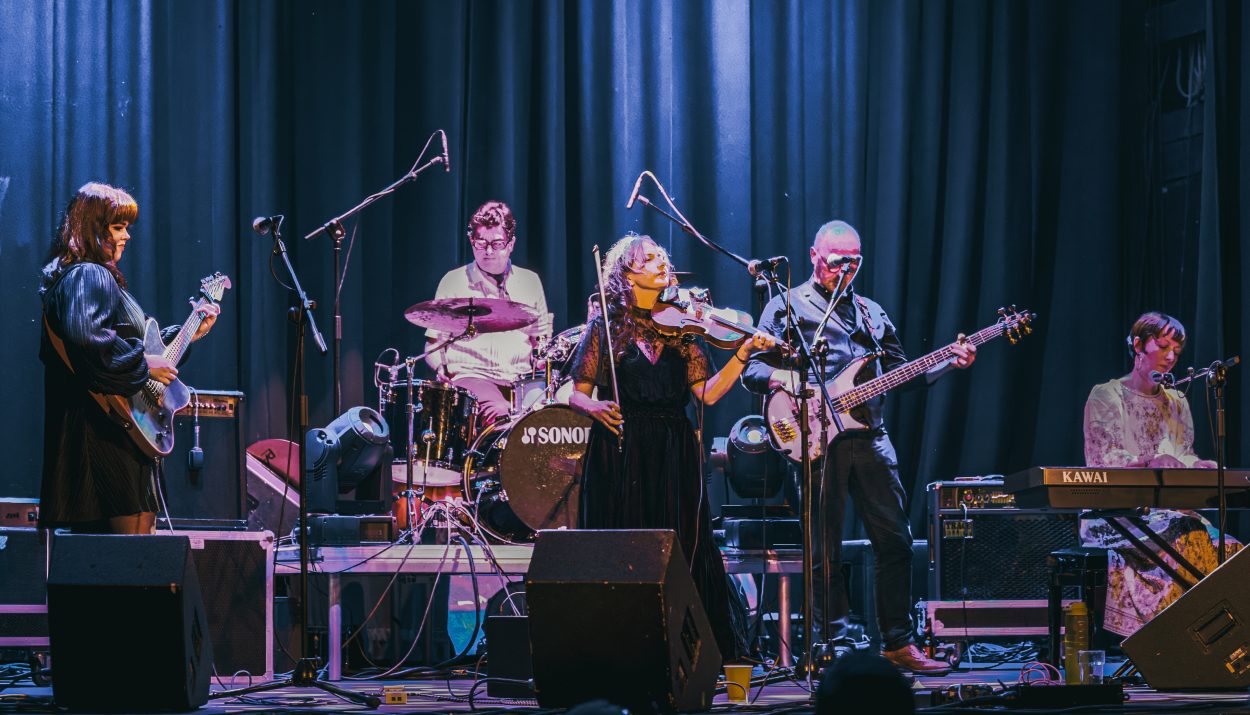

From the heart of Swansea, Dark & Twisties arrive with “Ungrateful Women,” a debut album that feels timeworn and strikingly new. Led by Sarah Birch, Kate Ronconi, and Sarah Passmore, the band reshapes modern folk through intimate storytelling, spectral harmonies, and quietly adventurous arrangements. Joined by Danny KilBride on bass and vocals, Dark & Twisties offer music that stays rather than demands attention, rewarding close listening.
Recorded at Mwnci Studios, the album benefits from warm, uncluttered production. Acoustic instruments breathe naturally: fiddle lines drift like memory, guitars feel tactile and close, keys add soft atmospheres, and the bass anchors everything with restraint. The focus is always on the voices—layered, confident, and emotionally precise.
The album opens with quiet resolve. “This Time” feels like a threshold moment. It’s a song about choosing differently after cycles of repetition. The vocals enter gently, almost cautiously, before blooming into rich harmony. It sets the emotional tone of the album. It’s reflective, grounded, and quietly brave.
In the second track, “The Lonely,” loneliness isn’t framed as isolation but as a shared human condition. The arrangement is sparse, allowing the fiddle and voice to carry a sense of aching space. The harmonies feel like hands reaching out across distance, offering understanding rather than solutions.
One of the album’s introspective tracks, “Questions,” leans into uncertainty rather than resolution. Lyrically and musically, it circles its themes, mirroring the way unanswered questions live with us. The delivery is intimate and confessional, with subtle instrumental shifts that keep you gently unsettled.
“Oh Ma Belle” introduces a more lyrical, almost romantic quality—though never sentimentally so. There’s a timelessness here, enhanced by the fiddle work and layered vocals. This song feels like a letter written across generations, balancing affection with melancholy.
Already known as a single, “The Wild” stands tall in the album’s narrative arc. It celebrates instinct, freedom, and the parts of ourselves that resist being tamed. The harmonies are striking, while the rhythm carries a sense of forward motion, as if the song itself is breaking free.
Gentle and quietly profound, “Random Acts of Kindness” explores small gestures as acts of resistance in a weary world. The performance is understated but deeply affecting, with a warmth that lingers. It’s one of the album’s most human moments, offering hope without naïveté.
Another single, “Grace and Dignity,” feels like a statement of values. The vocals are poised and assured, delivering the message with calm strength. Instrumentally, it’s beautifully balanced—nothing rushes, nothing overreaches. The song carries itself with the very grace it speaks of.
Narrative-driven and evocative, “Oh! Johanna” feels rooted in folk tradition while remaining emotionally immediate. The storytelling is clear, and the vocal arrangement gives each line room to breathe, as if inviting you to step inside the story rather than simply observe it.
There’s a subtle wit to “Procrastination,” lyrically and musically. The arrangement plays with pacing, echoing the theme itself. Despite its lighter touch, the song still carries emotional weight, reflecting on avoidance, self-awareness, and the quiet battles we fight with time.
The album’s title track, “Ungrateful Woman,” is its emotional core. It reclaims language often used to diminish women and reshapes it into something powerful and self-defined. The vocal delivery here is compelling: measured, unified, and unwavering. It feels less like a protest and more like a declaration of existence.
Closing the album is “Flags,” a reflective and expansive piece that gathers together many of the album’s themes: identity, belief, belonging, and division. The instrumentation swells gently, and the harmonies feel almost ceremonial. It’s a fitting ending—open-ended, thoughtful, and resonant long after the final note fades.
What sets the “Ungrateful Women” album apart is its vocal identity. Birch, Ronconi, and Passmore don’t compete for space; they listen to each other. Their harmonies are intentional, emotionally precise, and deeply musical. Each voice carries its texture, and together they create something fragile and strong.
Instrumentally, the album is elegant rather than elaborate. Keys, fiddle, guitar, and bass are used sparingly but effectively, always serving the song. The production at Mwnci Studios respects silence as much as sound, allowing dynamics to breathe and emotions to surface naturally.
With “Ungrateful Women,” Dark & Twisties have arrived as artists who know who they are. Their music rewards close listening and emotional openness. It speaks softly but carries weight. If you are drawn to folk that honours tradition while daring to evolve, for those who value storytelling, harmony, and emotional truth over spectacle, this album is a gift. Dark & Twisties deserve a place at your table, a seat by the fire, and the time it takes to listen. And once you do, it’s hard not to stay.
Listen to the “Ungrateful Women” album on Spotify
Follow Dark & Twisties here for more information