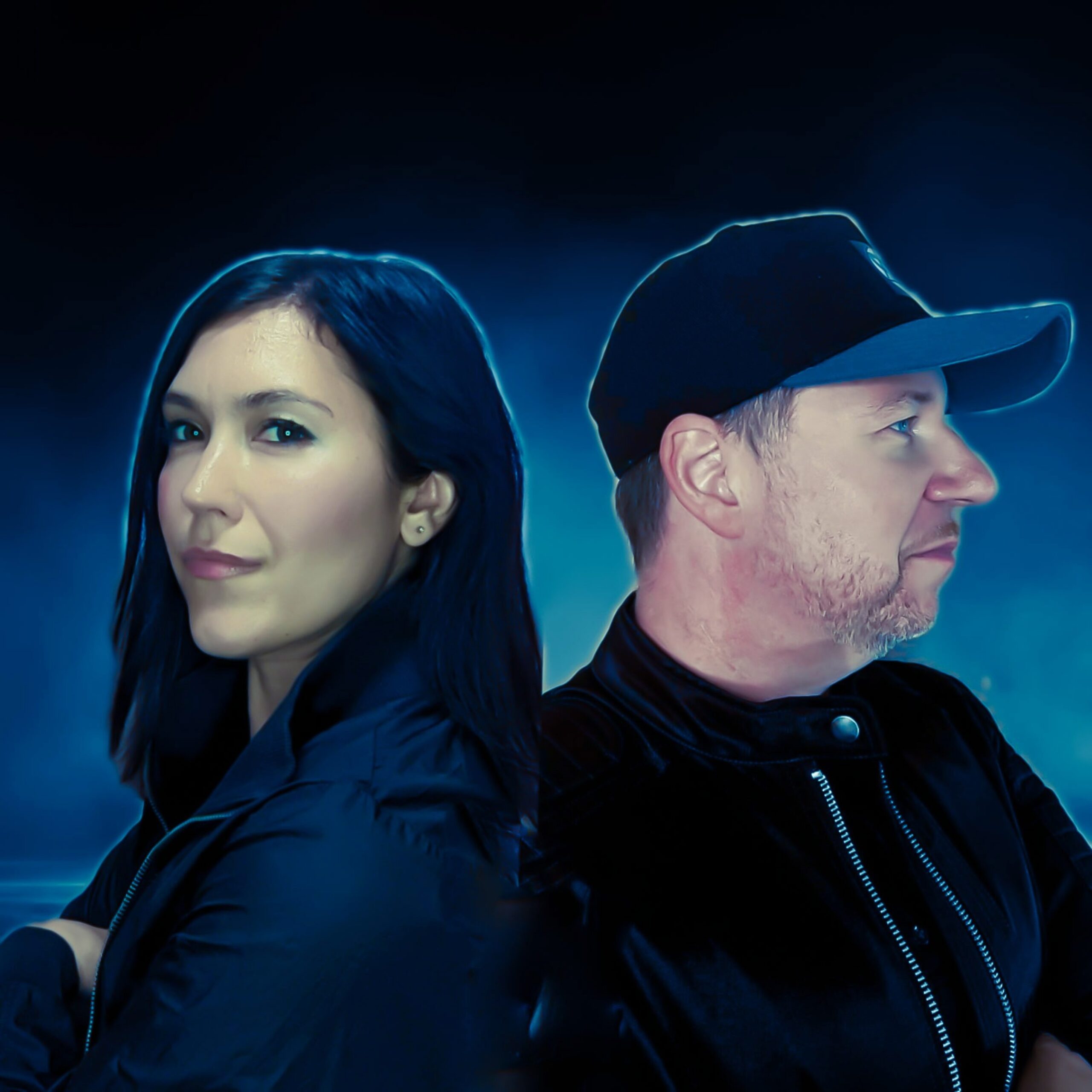

Hello people, it’s time to open the doors wide and turn up the volume. Join us in welcoming Nico Guzzi, an Italian composer, singer, and musician. His work comfortably bridges tradition and technology. Guzzi doesn’t pick sides; he connects them. His passions include music, writing, the Internet, technology, and football. His creative identity reflects the age he writes about: multifaceted, hyperconnected, and endlessly curious.
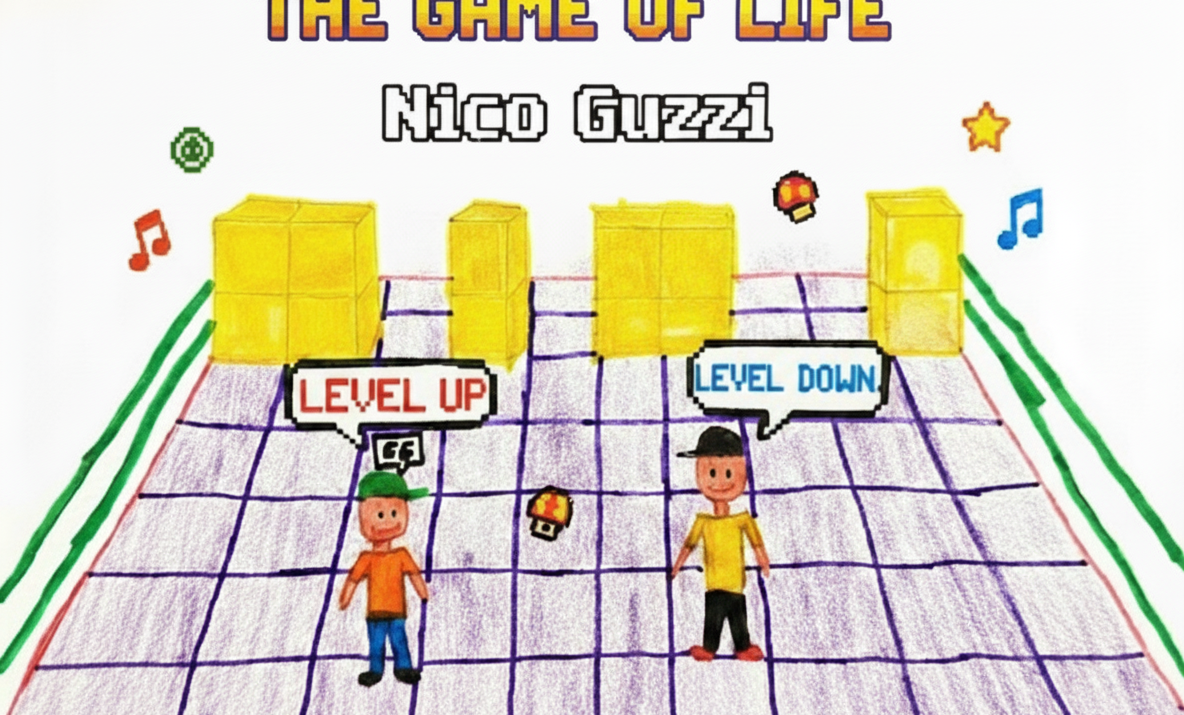
With “The Game of Life,” Nico Guzzi delivers a nine-track album that feels more like a cinematic journey than just a collection of songs. Released on January 15 this year, the album explores the emotional, cultural, and psychological landscape of the digital era. This album gazes directly at 2026, with all its contradictions, obsessions, and quiet anxieties, daring to dance with it. Stay with me as I dig into the album, track by track.
The album opens like a manifesto. “Play the Game” sets the theme: life as a system of rules we inherit without choice. Musically, it shows the album’s hybrid nature, blending pulsating electronic rhythms with orchestral accents that hint at something bigger than the dancefloor. As the opener, this track invites you into the game while quietly questioning if winning is possible or even worth it.
Sharp, satirical, and biting, “Loser” delivers one of the album’s most socially insightful moments. Guzzi critiques the modern obsession with status symbols, “crypto’s kiss” and “Tesla’s clan,” while revealing the emptiness beneath the surface. The song resonates deeply and captures the numbing impact of constant stimulation. Guzzi’s vocal delivery is cool and controlled, adding to the irony and emotional distance of the topic.
The third track, “I’m Not Yours,” signifies a shift toward personal liberation. This track focuses on reclaiming autonomy in a world that incessantly demands attention, loyalty, and conformity. The production opens up, allowing melodic elements room to breathe. The vocal delivery here feels more intimate and determined, emphasizing the song’s crucial declaration of independence. It’s a moment of clarity amid the album’s chaos.
One of the most evocatively titled tracks, “Anarchy in Nebbia a Banchi,” plunges you into a foggy, disoriented digital maze. “Static dreams” and blurred realities dominate the lyrics. Sonically, this track embraces darker textures, with layered synths and restless rhythms creating unease. It paints a clear picture of modern confusion: rebellion without direction and noise without signal.
More introspective, “Her Temptations” delves into desire, distraction, and emotional vulnerability. Whether seen as a person, an idea, or a temptation, “her” represents the forces that pull us away from clarity. The instrumentation is seductive yet restrained, letting subtle melodic hooks linger. The performance on this track is nuanced, balancing surrender with self-awareness.
Titled “Follow Me Now,” this track is one of the album’s most dramatic and ambitious. Dubstep meets orchestral textures in a cinematic surge that feels almost prophetic. Lyrically, this song offers an escape from “the grey,” positioning Guzzi as a guide through the noise. His vocal delivery takes on a commanding, almost messianic quality, reinforcing the song’s call toward transcendence.
When we get to “Mama,” we meet a deeply emotional and symbolic track that addresses “artificial walls” and generational distance in a tech-saturated world. This track balances tenderness with tension, pairing warm melodies with subtle electronic discomfort. Guzzi’s vocals here are moving, transporting a sense of longing and protection that grounds the album’s broader themes in something deeply human.
Hope reemerges in “The One,” a song suggesting that connection is still possible despite fragmentation. Musically, it leans into melodic pop without losing depth. The arrangement shines, offering a brief but significant look of unity and purpose. Guzzi’s voice softens, expressing sincerity rather than spectacle.
Finally, the album ends on a reflective and sobering note. “The End of Euphoria” doesn’t explode; it dissolves. It feels like the aftermath of a revelation, asking what remains once the highs fade. The production strips back just enough to let the message resonate, leaving you caught between destruction and rebirth. It’s a fitting ending for an album that doesn’t pretend to offer easy answers.
Vocally, Guzzi demonstrates versatility and impact. His delivery shifts smoothly between detached observation, raw confession, and almost messianic proclamation. He knows when to hold back and when to lean in, using tone and phrasing as narrative tools rather than just performance flourishes.
From the production angle, the album feels remarkably cinematic. Guzzi confidently blends elements of club and concert hall, allowing orchestral sounds to coexist with aggressive synths, dubstep drops, and electronic textures. The beats hit hard when needed but also allow space for melodic development and emotional depth. Classical instrumentation serves a structural purpose rather than merely a decorative one. Strings often carry emotional weight, while electronic elements add urgency and modern flair. This fusion gives the album a timeless yet futuristic feel, as if Guzzi is scoring a nightclub and a dystopian film at the same time.
In summary, “The Game of Life” album is not background music. It offers a genre-bending, intellectually curious, and emotionally charged experience that challenges us to dance, think, and feel, often all at once. Nico Guzzi proves he is a fearless creator, unafraid to mix classical elegance with electronic grit and satire with sincerity. If you are watching a world that feels increasingly upside down, this album provides catharsis instead of comfort. It invites you to shatter illusions, confront absurdities, and perhaps, through rhythm, reflection, and release, find rebirth.
Listen to “The Game of Life” album on Spotify.
Follow Nico Guzzi here for more information.