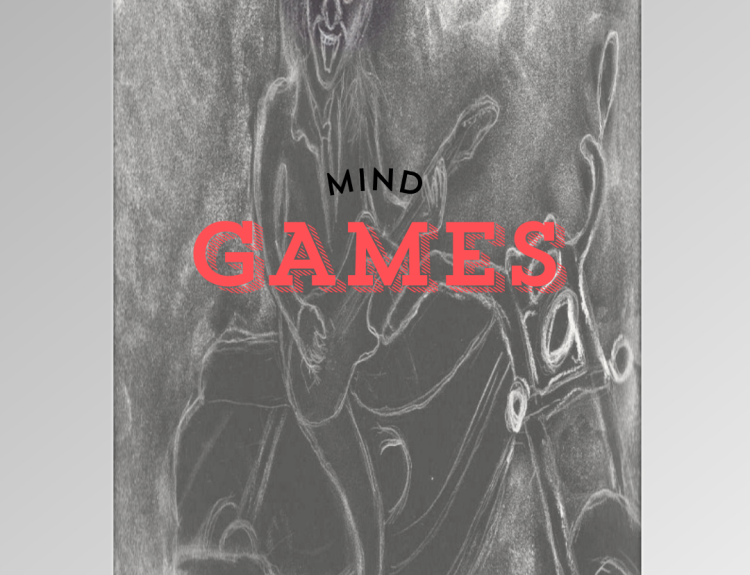

Third appearances must never amount to formal introductions. By this stage, Bloomfield Machine has earned the right to go through the door without having to knock, and this time Brian Kassan is here with an album that sounds as if a machine is having an unexpectedly human moment. Based in Huntington Beach, California, Kassan is the only person responsible for Bloomfield Machine: he is a multi-instrumentalist, composer, producer, performer, and mixer, and looks after all aspects of his music from start to finish. In nine full-length albums, he has developed a sound that doesn’t easily fit within a single genre. Classical composition, classic rock, electronic experimentation, noise, melody, glitches, and carefully shaped textures are all present in his work. His new release, “Algorithm & Blues,” takes that style in a more rock-oriented and rounded direction without giving up the little odd features that make Bloomfield Machine special.
What’s interesting about his approach to this album is that a great deal of it developed from not having a clear idea of where he wanted to go. Rather than sticking to a strict plan, he drew on vast collections of sounds and beats and let the combinations emerge through experimentation and instinct. This spontaneity leads to the impression that the record has been discovered. In fact, even the person who made it seems to have come across parts of it rather than having simply put them together. Although the album lasts just over thirty minutes and contains fifteen tracks, it progresses swiftly and does not have the character of something that is merely temporary. The pieces are concise yet have sufficient texture and individuality to make it worthwhile to listen to them more than once. It is strongly advised that headphones and a quiet room be used.
The opening piece, “A variation of nothing,” immediately sets out one of the main ideas of the album: that meaning can be found in emptiness. It appears to be a statement about transformation in that it takes fragments, silence, repetition, and apparently trivial sounds and turns them into something alive.
The title “Chemical Embrace” refers to a kind of connection that is most physical and instinctive. This embrace may be emotional, biological, technological, or all of these things. The melodic quality of Kassan’s work imparts a sense of warmth to the idea, while the electronic element gives it a slight degree of unsettling feeling.
The album’s title song, “Algorithm & Blues,” forms the core of its concept. It deals with the situation that arises when cold technological systems come up against very human emotions. The blues presented here don’t have to be traditional; they stand for longing, melancholy, frustration, and the emotional aftermath of modern life.
“The Engineered Life” continues, and human existence turns into something that is designed, optimised, altered, and possibly controlled. The idea of ‘engineered life’ poses a thought-provoking question: if life becomes more and more engineered, how much unpredictability and humanity can remain?
A keen insight into present-day life: attention has now turned into a commodity, and distraction is no longer by chance; it can be deliberately created. The track “Distraction Machine” describes the devices that surround us every day.
The title “Forensic Smiles” is one of the most interesting on the album and implies that happiness is being examined. Since a smile can conceal just as much as it reveals, the word “forensic” gives the picture a clinical touch. Bloomfield Machine transforms a common human gesture into a mysterious and rather suspicious one.
“Aggressively Unproductive” is a truly modern contradiction since productivity culture is all around us, but exhaustion, procrastination, and pointless activity are still just as strong. The three words contain humour, frustration, and social commentary.
Small interruptions turn into a way of life; the term “Hiccup Culture” suggests glitches, technological failures, disrupted rhythms, and the minor disruptions that have become part of modern culture, and it is also ideally suited to Bloomfield Machine’s fascination with unexpected sonic accidents.
Waiting can be a peculiar kind of existence between decisions, destinations, conversations, or different versions of ourselves; the title “The Waiting Room” implies a state of suspension, uncertainty, and that odd emotional emptiness which comes from being neither here nor there.
“Deep Dish Dharma” is a song that is playful yet has a philosophical significance. It combines spiritual wisdom with something wonderfully ordinary and down-to-earth, and this blend suggests that Kassan is reminding us that enlightenment does not always have to be serious; it is possible for deep ideas to come about through the absurd.
At first, clarity seems like a good thing, but if we think about what it might reveal, understanding can dispel reassuring illusions, and certainty can be more terrifying than confusion. The idea of the “Threat of Clarity” reflects the album’s interest in the uneasy boundary between technology, perception, and truth.
Given the considerable amount of conceptual tension, wandering takes on the character of freedom. The song “Meander” is an expression of Kassan’s way of working: proceeding without having a clear idea of where one is heading and letting the destination rise on its own.
A plea for silence, or at least for an end to relentless repetition. “Stop the Hammering” can be heard literally, psychologically, or culturally. In an album filled with machines, glitches, and layers, the desire to simply stop becomes surprisingly powerful.
“The void for beginners” is a brilliantly dry and imaginative heading. Instead of treating existential emptiness as something mysterious, Kassan presents it in the form of an introductory course. The track comes across as a kind of invitation to face uncertainty even though it doesn’t pretend to have all the answers.
It is appropriate to end the album with “Time Blind (Alternate).” When we are absorbed, overwhelmed, engaged in creation, waiting, or just trying to keep up with modern life, time can vanish. The title makes the album hang between the past, the present, and whatever lies ahead.
Kassan’s biggest strength lies in his full control of the entire process; since he writes, performs, produces, and mixes the album himself, it has an unusually coherent character. It doesn’t seem as though an external producer has been brought in to eliminate its oddities. The imperfections, sudden changes, glitches, noise, and odd combinations all come from the same creative mind that develops the melodies.
The fact that the music shows off this sense of freedom is clear. The rock-inspired elements give the album more substance and immediacy, whereas the electronic sounds, the programmed beats, the manipulated textures, and the experimental noise ensure that the music remains unpredictable. Yet there is always a composer’s ear at work. Kassan has a good understanding of arrangement, of pacing, of repetition, of contrast and of melody, which is why even the more unusual sections have a purpose and do not sound arbitrary. Likewise, the way he performs is of the utmost importance. The playing is not aimed at displaying technical skill for its own sake. On the contrary, the playing serves the composition. This is where his experience as a player on several instruments proves especially useful: he can view the various instruments as different colours in a broader sonic scene rather than as individual highlights.
On this third visit, Bloomfield Machine has pulled off a most impressive entrance. “Algorithm & Blues” does more than just add another entry to Brian Kassan’s record collection; it proves that the artist is still curious enough to let the music surprise him. At a time when so much music is refined with a view to predictability, this openness to experimentation comes as a refreshing sight. This is a well-deserved comeback and, in fact, more than the previous one.
Listen to the “Algorithm & Blues” on Spotify
You can follow Bloomfield Machine here for more information.