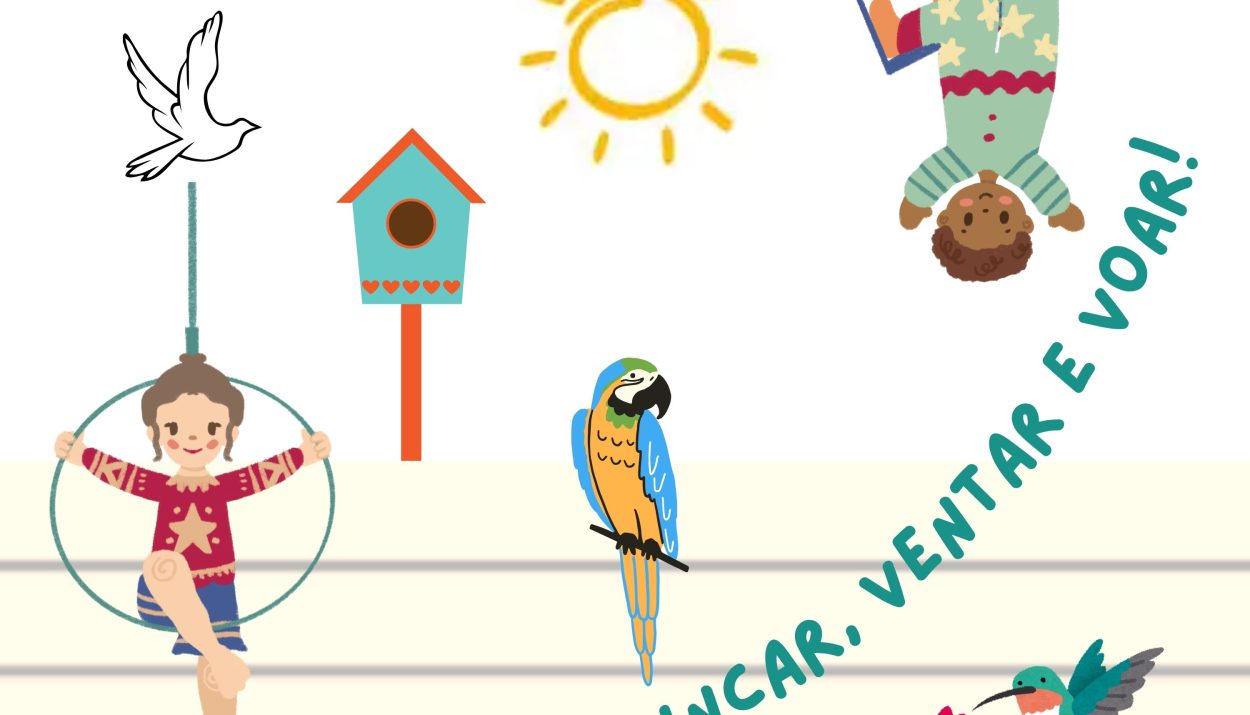

Although it is an album designed to entertain children, Ana Pê’s “Músicas para Brincar, Ventar e Voar!” does something more important: it listens to them. This Brazilian artist, also an actress, theatre educator, researcher, and a PhD candidate in Performing Arts, has blended the instincts of a teacher, the imagination of a theatre maker, and the sensitivity of a songwriter in this awesome intentional project. The music has been developed over the course of many years through her observation of children and teenagers in the classroom, transforming their questions, fears, discoveries, and dreams into songs. Because of this experience, this album has a rare quality of sincerity; it does not talk down to children; it talks with them.
“Bloco das Crianças” starts the album with a celebration of diversity and a sense of belonging; its communal atmosphere right away implies that childhood should be open to all kinds of personalities, bodies, and ways of being. The vocalists sing with brightness and a parading confidence, giving the song the feel of an invitation to take part in the celebration rather than a lesson.
“Mãe Natureza” makes environmental awareness feel personal and easy to understand. It prompts children to view nature not as a distant or abstract problem but as something that is part of the world they live in and rely on. The song’s lighter and more flowing style allows the message to come across naturally, and Ana Pê’s performance remains gentle.
“Meu Corpo, Meu Templo Sagrado” is probably the album’s most socially significant statement; it deals with issues of body autonomy, consent, and self-care by presenting important ideas in language that children can understand without feeling afraid or ashamed. Ana Pê treats the subject with calm authority, and the performance works because it comes across as protective, not alarming.
The song ‘Quem Disse Que Menino Não Chora?’ challenges the notion that boys have to hide their emotions. By doing so, it creates room for vulnerability and emotional freedom, and Ana Pê sings it encouragingly and humanly without being overbearing. It carries a simple message that has the potential to remain with a child for many years.
“Espelho, Espelho Meu” focuses on self-esteem and the not always easy relationship that children have with their appearance. The playful approach allows Ana Pê to convey a mischievous and reassuring tone, turning self-acceptance into a musical rather than an instructional thing.
Empathy is at the heart of ‘Desenho Cego’. The concept of trying to understand someone without at once judging or controlling what we see is illustrated by the song’s imaginative scenario. In this song, Ana Pê’s performance is theatrical, conveying character, curiosity, and emotional discovery through the way she phrases things.
“Caminho do Mar” moves into more reflective ground, dealing with the subject of grief while still maintaining hope. It represents one of the album’s most sensitive emotional shifts. Ana Pê doesn’t sing the piece over the top, letting tenderness and control take charge. The outcome is a song that recognises sadness without treating sadness as the final chapter of the story.
“Passarinho Branco” stands for freedom and once more opens up the emotional world. The image of flight in the song fits perfectly with the album’s general philosophy, which is that children need space in which to imagine, explore, and become who they are. The song is given a light, affectionate character by Ana Pê, a quality which strengthens its feeling of possibility.
The record ends beautifully with ‘Gira da Alegria’, once more embracing joy and playfulness, as if offering a final call to dance, to laugh and to be a child. It is no coincidence that, after the album discusses identity, consent, emotion, grief and empathy, it concludes with play; rather, this is a clear assertion that joy is not a distraction from healthy childhood development but, in fact, forms part of it.
The album was produced by the highly respected guitarist Luiz Brasil and features several notable Brazilian musicians providing support; it effortlessly shifts from march to xote, to rock, blues, MPB, baião and ska. The different instruments give every track its unique character at the same time, ensuring that the entire album has a warm, lively, and welcoming atmosphere. Ana Pê’s voice is also a key element in the production. Instead of depending on over-the-top theatricality, she sings with clarity, affection and expressive control, knowing exactly when to play, when to soothe and when to allow the lyrics to carry the emotional weight.
Ana Pê should not be presented as a children’s musician, but as an artist who realises that children’s art can be emotionally intelligent, musically sophisticated, and socially meaningful without giving up fun. “Músicas para Brincar Ventar e Voar!” is playful rather than shallow, educational without appearing as if it’s from a classroom, and compassionate without becoming sentimental. It is music that enables children to feel, question, imagine, belong and, most importantly, to stay children. Rather than offering yet another set of songs for a young audience, Ana Pê comes up with something more valuable; she presents a musical language that shows respect towards childhood, and that is a gift worth remembering.
Listen to the “Músicas para Brincar Ventar e Voar!” album on Spotify.
Follow Ana Pê here for more information.