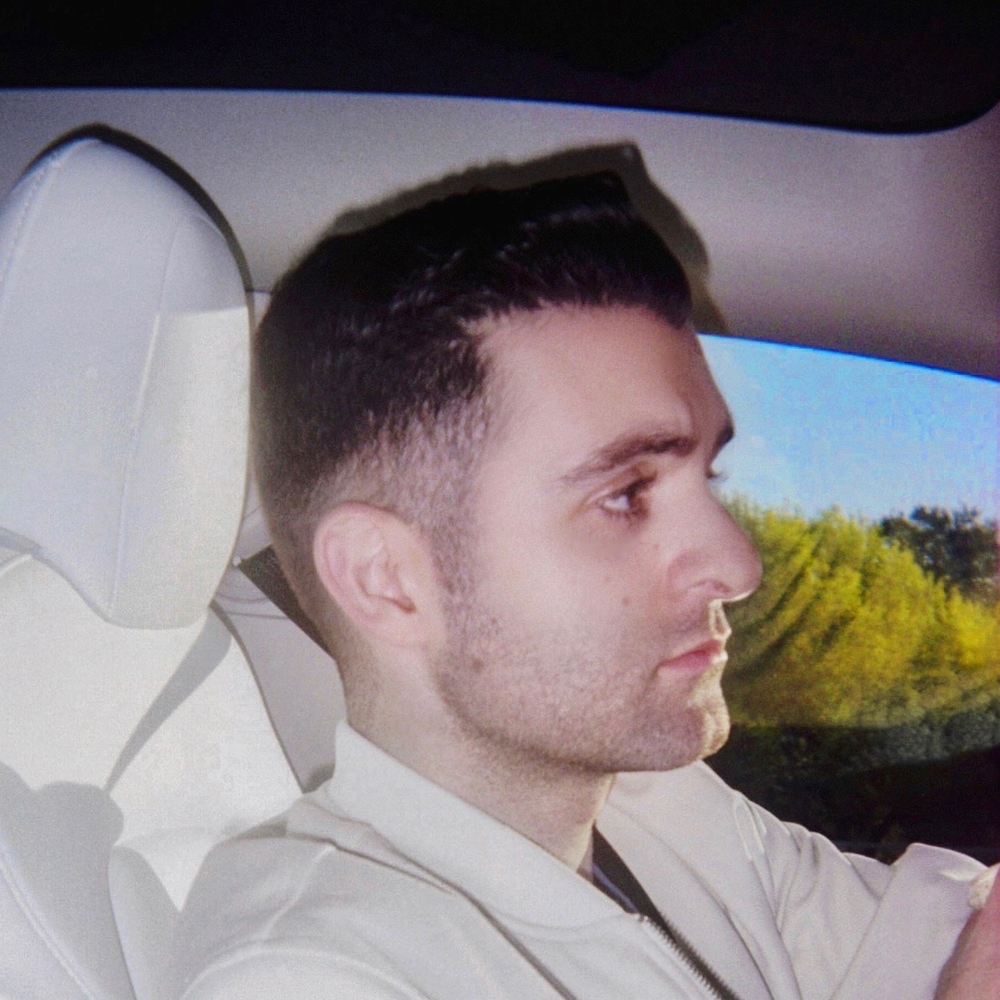


Daniel Higley doesn’t just produce instrumental music; rather, he creates environments in which we can vanish. Living in Regensburg, Germany, he has cultivated a cinematic style as a result of many years of exploring sound and due to his evident love of atmosphere. The spacious and dreamy, light influence of Air’s Moon Safari is evident in his sense of space and mood, but “Dragon’s Blood” shows an artist taking that style in a personal and dramatic direction. Following on from the international scope of projects like Gatekeepers, Higley now offers an EP that doesn’t seem to be a set of songs but instead four different chapters of the same emotional experience.
“Dragon’s Blood” was released on July 10, 2026, and marks the first offering from his upcoming album The Pendulum; the central theme of the song is strong in that it explores how we can rebuild ourselves when life has torn everything apart. Arising out of the upheaval of his divorce and the dramatic events connected with it, the song transforms pain into action. Although it is music concerned with endurance, it never comes across as a sermon on survival; instead, the emotion is conveyed through the performances, the atmosphere, and the feeling that each sound has been intentionally placed.
“Dragon’s Blood,” the title track, forms the EP’s emotional core. Although the story is based on hardship, the overall attitude is one of defiance. Instead of remaining completely in the dark, it looks for the strength to get back on its feet. Dämmerlie’s vocals provide the song with a delicate human element. The way they are delivered is vulnerable but doesn’t become weak, which is perfectly in keeping with the song’s theme. The Nigerian choir gives the song a powerful boost, extending the emotional scope from individual suffering to something that is almost communal and spiritual. The contrast between the intimate lead vocals and the fuller choir is what gives the song its feeling of rising. You not only hear someone struggling but also the possibility of renewal.
The second track, “Dragon’s Blood (Short Story Long),” goes beyond merely repeating the narrative and instead develops it further. The title implies a reflective approach: the same experience being looked at with greater context, more distance, and possibly with greater honesty. While the main track focuses on the struggle, this one is concerned with the act of telling that story; the process of making sense of what took place. The importance of the vocals in giving the piece its storytelling effect stays unchanged. The delivery is most effective when it sounds conversational and open rather than being overly emphasized.
“Dragon’s Blood (Under the Shadow of the Sea)” presents a more sombre picture, and the song seems naturally linked to ideas of uncertainty, isolation, and emotional intensity. Since the sea can symbolise danger and purification, this duality is suitable for an enduring upheaval EP. Here, Higley’s atmospheric style becomes particularly significant; the music is intended less to provide immediate impact than to establish a psychological atmosphere around the vocals. The outcome is deeply immersive and reflective, the emotional strength arising from the contrast between vulnerability and the immense surroundings.
The final track, “Dragon’s Blood (Fast Eddie)”, provides yet another view of the EP’s main theme. The title gives an impression of movement and flair, indicating a more relaxed or energetic take on the story. This contributes to preventing the EP from having a single, one-dimensional emotional impact. The performance still stays within the scope of the project’s central character; this version comes across as just another aspect of the same experience rather than merely a remix done for no particular reason. It gives the listener a different way of seeing the song’s identity and finishes the release with a pleasant shift in pace.
One of the EP’s major wins is its production. Higley carried out the work on guitar, bass, and synthesizers in his home studio in Germany, and the live strings were recorded in Kyiv under very difficult conditions. This journey across continents is evident in the music’s sense of scale since it combines intimate production decisions with orchestral colour and international collaboration. The blend of strings, synths, guitars, bass, vocals and choir results in a sound that can shift from personal to grand without losing its emotional core. Higley’s approach to arrangement realizes that cinematic music is not simply about sounding big; it is about knowing when to leave space for emotion.
The project is also aided by top-quality finishing, with the mixing being done by Paul Boutin, who has won a Grammy Award, and the mastering carried out at Abbey Road Studios in London. This kind of reputation is important since Dragon’s Blood relies on clarity, atmosphere, and balance. The international production background is not merely ornamental; it is an element that contributes to the EP having an ambitious and fully realized feel.
Daniel Higley merits more than a simple introduction; he is a creator of atmosphere, a builder of emotional space, and an artist who is not afraid to transform personal turmoil into something beautiful. Dragon’s Blood brings the listener into that process without concealing the wounds. The music is wounded, cinematic, intimate, and hopeful—and most crucially, it realizes that the most powerful music is often not concerned with falling apart but with finding the strength to rise.
Listen to the “Dragon’s Blood” EP on Spotify
Follow Daniel Higley here for more information