
Ellery Twining arrives in Oy! not just as a composer, but as a force of nature, an attentive observer of the landscape, and an emotional creator. He’s an artist who knows that music doesn’t always need to lead a scene. Sometimes it should become the breath of the scene, its shadow, its underlying emotion, and its pre-memory. In this film, Twining does something much harder than just decoration. He makes sound feel like an atmosphere.
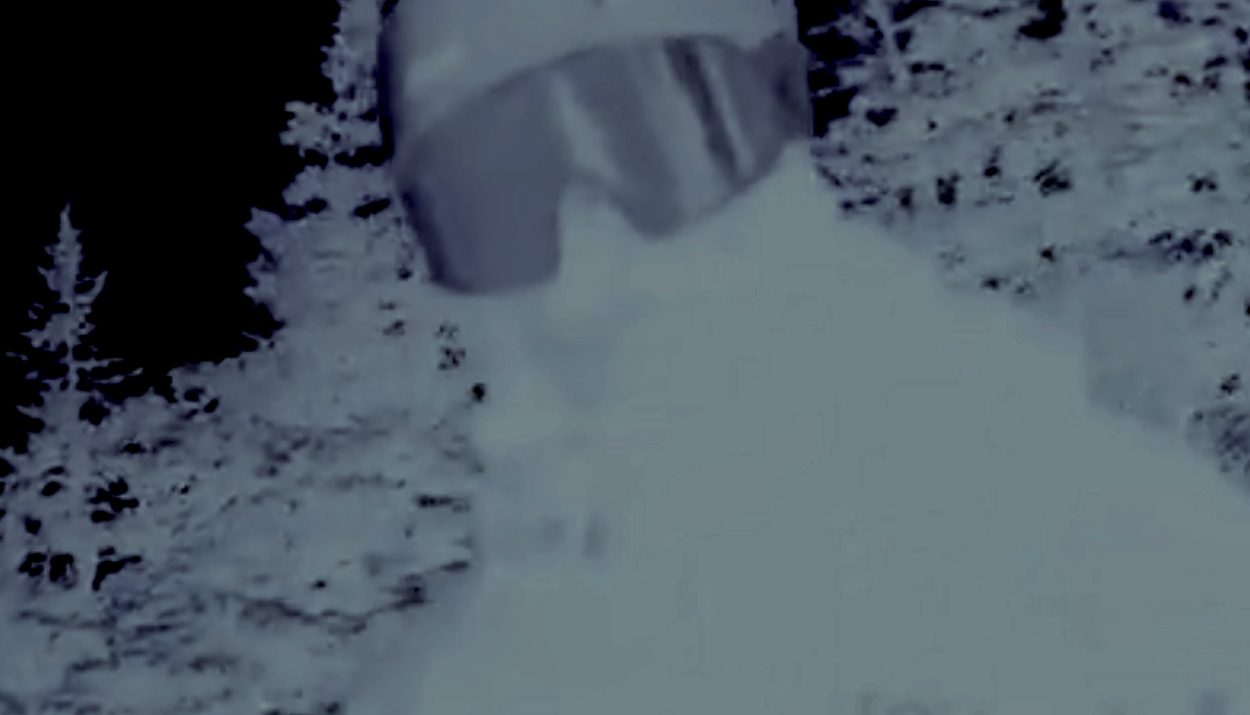
Oy! is a film that captures movement without rushing, showing images that feel observed and remembered. Snowy mountains, rolling hills, forests, huts, tree-lined roads, wooden walkways, and two figures navigating through it all create a visual poem that goes beyond typical narrative structures. The film doesn’t hurry to explain itself; it drifts, pauses, and opens up. Its strength lies in accumulation: one landscape flows into another, one gesture responds to the next, until the whole piece feels like a meditation on being present in the world rather than trying to conquer it.
This is where Twining’s soundtrack finds its purpose. Built around the idea of undetermined music, the score relies on intuition instead of a strict plan. Each track builds on the previous one in a thoughtful, evolving manner. The music listens to itself as it plays. It doesn’t push for resolution; it reveals mood, like turning over stones in darkness and discovering something warm and alive underneath. This approach gives the soundtrack a unique honesty. It feels natural yet carefully crafted. It is free but also precise. It is unplanned yet quietly structured.
The theme of Oy! is not just about nature, travel, or solitude. It focuses on the delicate relationship between human presence and vastness. The two figures are not exaggerated as conventional characters; they act more as observers moving through a space that feels grand, indifferent, and intimate all at once. When they drive along a path lined with trees and walk on wooden walkways, the film hints at a temporary truce between the human body and the landscape. They belong to the frame, but they do not possess it. That subtle imbalance gives the work its emotional weight.
Visually, the film shines when it embraces contrast: the stark whiteness of snow against the soft depth of the mountains, the vertical lines of trees against the openness of the hills, the stillness of huts against the flowing motion of the road. These images are not just beautiful; they create a rhythm of scale. The human figures seem small but never insignificant. This distinction is important. The film grants them dignity by letting them be part of something larger. It steers clear of the sentimental trap of making nature merely a backdrop. Here, nature shares authorship.
Twining’s work as a composer is commendable because it avoids over-explanation. The soundtrack doesn’t suffocate the visuals with pre-packaged emotion. Instead, it creates space around them. You can imagine the music arriving like fog, settling into the spaces the images leave behind. The result is a score that feels less like background music and more like an inward lens capturing what the eye alone cannot see. The improvisational process gives the music a human touch, a sense of risk, which is essential. Without that risk, the soundtrack could have become pretty but lifeless. With it, it comes alive.
What makes the film and soundtrack work so well together is their (visuals and music) shared refusal to dominate. Neither tries to be the loudest element. Instead, they create a balance of attention. The visuals invite reflection; the music deepens that experience. The outcome is immersive without being overwhelming, poetic without losing clarity, and intimate without downscaling what is presented. This balance is rare.
Therefore, Ellery Twining should be recognised not just as a contributor to a film but as an artist who understands the true value of subtlety. He composes as if he were shaping weather into feeling. In Oy!, he doesn’t create music that stands apart from the landscape; he creates music that seems to rise from it, as if the hills themselves began to remember how to sing. This is the lasting gift of Oy!: it transforms viewing into listening and listening into a way of travelling. A film like this doesn’t ask to be decoded; it asks to be experienced. Twining’s soundtrack responds to that invitation with elegance.
Watch “Oy!” on YouTube with the above link
You can follow Ellery Twining here for more information.