
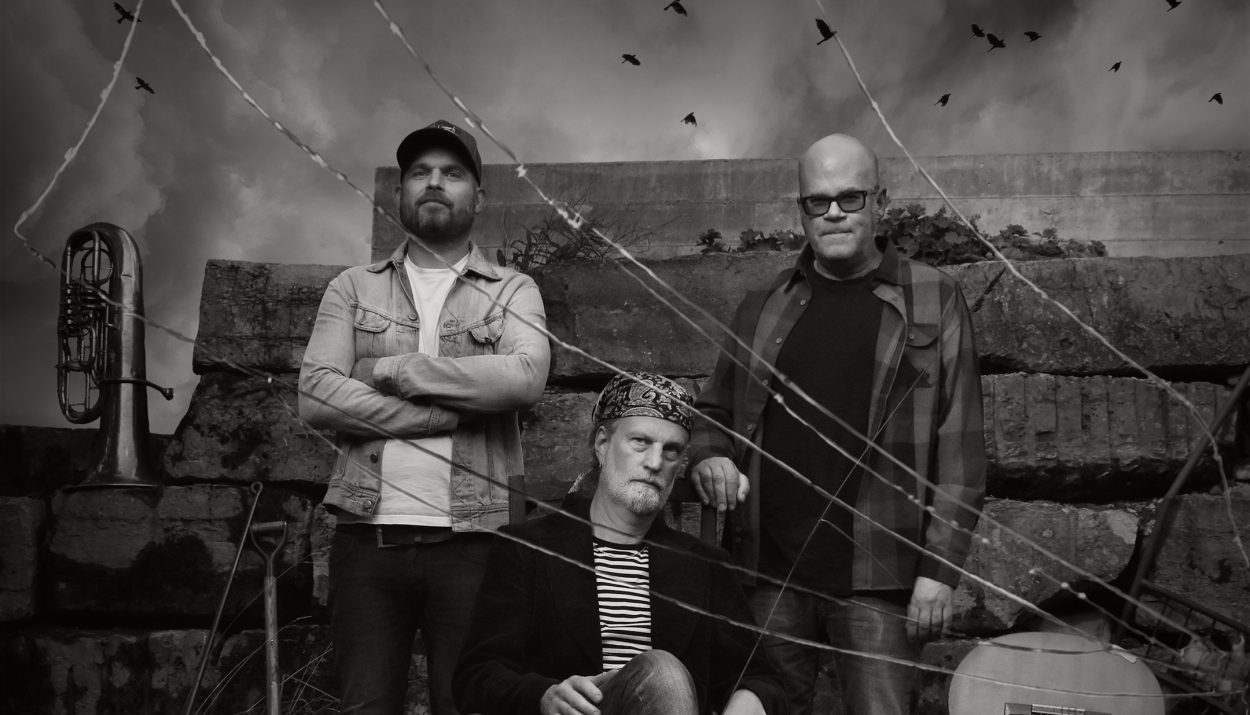

Jens Gustavson may be a familiar name to anyone roaming Sweden’s alternative fringes, but for newcomers, imagine a songwriter who treats music as a lived-in space where folk, blues, rugged poetry, and raw human honesty sit at the same kitchen table. For nearly three decades, he has shaped his path through Swedish ballads, folk, punk edges, and distorted-guitar grit, delivering performances known for their tense quietude and eruptive drive. Vissa dagar (Certain Days) captures him at his most unguarded: intimate, acoustic, lo-fi, and beautifully human.
Recorded mostly live, “Vissa dagar” thrives on atmosphere. Everything feels close. The scrape of strings, the breath before a phrase—a warm, lived-in sound shaped by minimal production and understated arrangements. The acoustic guitars dominate, occasionally joined by subtle percussion and gentle textures, but the focus stays firmly on Gustavson’s unfiltered, slightly weathered, and deeply expressive voice.
The album opens like a daybreak. “Humlor” (Bumblebees) buzzes with gentle motion—light fingerpicking, warm room tone, and the simplicity of soft observation. Gustavson’s voice feels close, steady, and reflective. The song’s theme circles the fragility of small moments: noticing what keeps the world alive even when we ourselves feel still. The track acts as an invitation—slow down, breathe in, look closer. Nothing about the recording is polished; that is its charm.
“Numera” (“Nowadays”) shifts toward introspection about change, aging, and the rearrangements life forces on us. Gustavson’s vocal tone carries a weary brightness, as though he’s speaking with half a smile about things that used to be simple. The guitar work remains sparse, allowing tiny imperfections and string scrapes to do their part in the storytelling. It’s a song that feels like flipping through old photographs in dim light.
The title track, “Vissa dagar,” is the album’s emotional anchor. Here, Gustavson leans into blues influences that never erupt. His delivery is raw and human, filled with unspoken sentences between the lines. Lyrically, the track acknowledges that some days carry weight for no reason at all, and that’s simply how life moves. The live-in-studio production enhances the heaviness—every breath is kept, every vibration felt.
With “Kanske just det här” (“Maybe Just This”), hope flickers. The song focuses on accepting small joys, unexpected clarity, or the brief alignment of life’s many moving parts. Vocally, Gustavson adds a tender lift, softening the grit that’s present elsewhere. The instrumentation is minimal but warm, like a window cracked open to let in fresh air.
“Kommer hem” (“Coming Home”) introduces a sense of motion and emotional travel. It’s about the journey back to oneself, to familiar ground, or to the people who anchor us. His performance here is not rushed but propelled. The acoustic guitar carries a rhythmic heartbeat, and the production preserves the feeling of a musician playing while the door behind him is still swinging closed.
“Huset” (“The House”) is perhaps the album’s most cinematic moment. It sketches the architecture of memories—rooms filled with echoes, corners that hold secrets, walls that remember more than we do. Gustavson’s voice deepens here, embodying gravity without losing gentleness. The performance is restrained but powerful, and the rawness of the recording makes the imagery land harder.
“Vals för utmattade” (“Waltz for the Exhausted”) is a beautifully resigned piece. It is a slow dance with burnout—both a lament and a lullaby. The rhythm sways softly, creating a sense of circling rather than forward movement. Gustavson’s vocal delivery is tender, almost fragile, but never defeated. This track demonstrates his gift for turning personal fatigue into shared understanding.
The closing track, “Chant,” is meditative and earthy—a grounding ritual after the vulnerability of the journey. The performance feels almost improvised, as if captured in a single, uninterrupted take. Vocals and guitar lock into a mantra-like repetition, inviting you to exhale and settle. It’s a perfect ending: open, humble, and quietly powerful.
The production choices across “Vissa dagar” are deliberate in their restraint. The album leans into tape hiss, open air, and the natural imperfections that arise in live recording. Rather than layering instruments, Gustavson and the producers choose to remove them—carving out as much space as possible so that every nuance of his voice and guitar can breathe. You hear fingers brushing strings, breaths taken mid-line, the soft thud of a foot tapping, and the resonance of a room that hasn’t been over-treated.
Gustavson’s performance throughout the record is marked by emotional clarity rather than technical showmanship. His delivery is confident in its softness, grounded in life experience, and colored by a subtle blues phrasing that betrays decades of musical exploration. His voice, somewhere between a whisper and a storyteller’s husky murmur, carries the weight of lived stories without theatricality.
If you’re new to Jens Gustavson, “Vissa dagar” is a perfect doorway. It captures the essence of an artist who has spent thirty years not chasing trends but cultivating depth. His music belongs to backroads, late nights, and honest conversations. It offers no quick answers, but it offers companionship—the kind that matters. This album is simple, yes. But simplicity is a brave choice and a necessary one. And in Gustavson’s hands, simplicity becomes something exceptional.
Listen to “Vissa dagar” on Spotify
Follow Jens Gustavson here for information