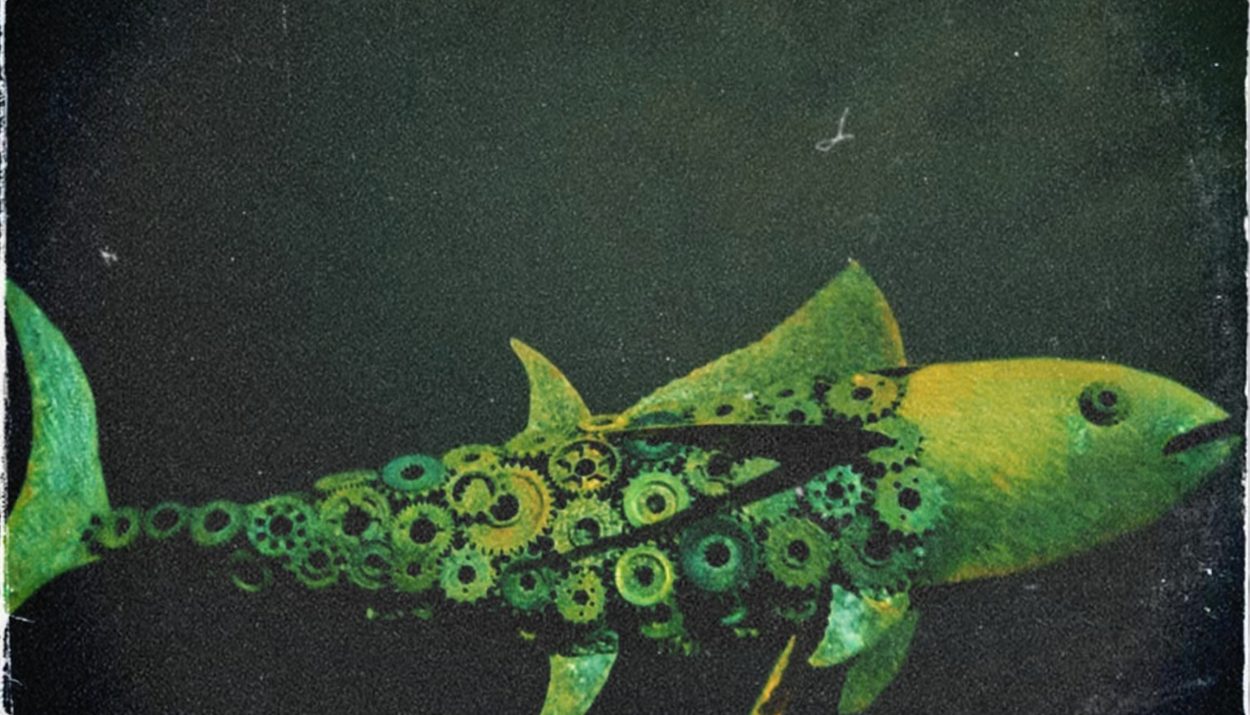

Adelaide/Kangaroo Island has produced an artist who sounds like he has little interest in pretending everything is fine. Johnny Amoral comes across with the honest clumsiness of a late-night confession, with the heaviness of a powerful amplifier, and with a kind of songwriting that directly addresses anxiety, isolation, identity, and self-destruction without attempting to disguise them. Although his music has the genetic makeup of 90s grunge, “Delirium” is not merely an attempt to evoke nostalgia. It is a modern album made on the basis of an old-fashioned belief: write honestly, play hard, and let the songs speak for themselves.
The second album shows a clear advance on the first one, with the guitar work expanded, the hooks made more distinct, and providing Amoral with a larger scope in which to examine the more complicated aspects of the human experience. People who enjoyed Nirvana, Silverchair, Alice in Chains, Soundgarden and Bush will at once recognise the kind of music involved, but “Delirium” has a sufficient individuality to be considered in its own right.
The album begins with the song ‘Pull the Trigger’, which is a clear depiction of indecision and the draining effect of overthinking. The line ‘Every choice feels like a threat’ sets the nervous tone, and ‘I call it thought, it’s just delay’ gets right to the main issue. The line, ‘I don’t know when to pull the trigger,’ serves as a metaphor for the inability to take action when life requires a decision. The idea that ‘If I jump, I might break. If I wait, it’s already gone’ could be the most straightforward and successful expression of fear in the whole album: at times, waiting is a form of loss itself.
The second song, “Here,” goes from being hesitant to becoming an act of reclamation. The expression “the same streets, different skin” describes the odd feeling of going back to places you know well but as a different person. The idea of “old blood waking up inside” implies that something which had been buried is now beginning to breathe again, and the line “I didn’t lose it, I just ran, now I’m back here” turns the song into a quiet statement of return. This song is about realising that the parts of yourself that you tried to get away from may in fact be the ones worth keeping.
“The Patient” is a criticism of the modern tendency to be impatient and the obsession with constant stimulation. The lines “I reach for noise before I think” and “Another hit, another fix” show how a mind has become used to filling every moment of quiet. The repeated phrase “The patient needs to practice patience” is intentionally ironic since the narrator realises the problem but is still trapped by it. It is only when Amoral admits “Slow it down, I don’t know how” that the song has turned into an uncomfortable commentary on an age which has lost the ability to stay still.
“Stranded” manages to reduce the emotional intensity without giving up on its dark tone. The image of being ‘past the last streetlight’, a place where ‘the road forgets its name’, establishes a sense of isolation that reflects the singer’s inner loneliness. His thoughts are surrounded by water, the night arrives heavily and cuts the power, and home turns out to be rather strange and foreign. The line ‘I didn’t know how far I was. Till I left’ is a wonderfully controlled insight. This song proves that, at times, going back home means encountering an older version of yourself who has never entirely vanished.
“Dream/Déjà Vu” carries on the exploration of memory and belonging. The lines “Old faces flicker in the glass, and the street” and “Every wall knows my name, but they don’t know me” turn ordinary surroundings into something almost supernatural. By saying “Déjà vu in my veins. It burns when I breathe,” the feeling of nostalgia is made to seem physical rather than sentimental. The contrast between “Same streets, new skin” and “I’m home, but I’m not whole” reflects the album’s continual question: what occurs when you go back to a place that remembers you better than you do yourself?
The sixth track, ‘Fluming’, serves as an important moment of transition in the album. Instead of just repeating the emotional themes introduced earlier, it reinforces the album’s restless and unstable nature. Since it is placed at the centre of ‘Delirium’, it acts as a natural turning point—an additional journey through the album’s turmoil before the record starts to deal with authority, technology, connection and memory on a broader scale. The inclusion of ‘Fluming’ means that ‘Delirium’ comes across as a journey rather than just a series of songs.
Moving on, “Froot Loopz” offers a refreshing amount of sarcasm and a dark sense of humour. Hidden behind its catchy title is a sharp critique of institutional authority and the absurdity of being judged by whoever has the power to approve what you do. The line ‘I used to be the problem. Now I’m ‘following the plan’’ reveals the hypocrisy, while ‘who gets to sign my name’ points out the real problem. This song is one of the album’s most stark shifts away from straightforward introspection.
“AI Love You” firmly places the album within the contemporary world. Although the subject matter is technology, the song is actually concerned with human loneliness. The line ‘Now you pray to a pixel saint’ presents a disturbing image of digital devotion, and ‘you don’t miss the human strain, just the ghost it learned to fake’ raises the question of whether artificial intimacy can be more appealing than real human connection. This song implies that the truly frightening aspect of AI might not be the fact that it could become too human, but rather that people may gradually become willing to accept an imitation.
“Lunar Frequency (Spiritual Meets Science)” takes the album further into more cosmic areas. It uses gravity, blood, bones, the tides and breathing as means of exploring whether human connection is controlled by science, spirituality, fate or by something that we can’t explain. The song asks “Are we merely bones? Are we the spark?” and “The moon pulls the tides, it pulls my skin,” and thus gives it a physical basis even though it raises such large questions. The concept of two people staying connected while being ‘miles apart’ gives the song a feeling of mystery and longing. Since it doesn’t attempt to give answers to its questions, those questions become all the more interesting.
To me, “Heroin Chic” is probably the most emotionally honest moment on the album. The world it presents, with its floors, dust, the noise from the television, and empty rooms, paints a picture of youthful disorder without suggesting that the damage had any beauty about it. The line “Nothing ringing, nothing waiting, just the room breathing” is powerful because of its simplicity. The line “Loved it till it broke me” and the wish to “stay unfinished” show how the true theme is: the fear that healing could also mean losing a part of oneself.
The final track on the album is “Back When Tigers Used to Smoke”, a bittersweet meditation on childhood and the loss of innocence. The line “The world was small as my street” captures a period when danger appeared far away and simple. “I miss not knowing, I miss being wrong” is the main emotional point of the song, and “You don’t lose your innocence, you just watch it bleed” transforms the nostalgia for childhood into something considerably more sombre. The last idea that growing up “Just means losing what was good” gives “Delirium” a deeply human ending. While knowledge brings understanding, it also removes the comfort of not knowing.
In the album, Amoral’s vocals play a vital role in the material; how he delivers the songs is such that it does not sound excessively polished or disconnected from the emotions beneath them. He alternates between control, tension, and force, ensuring that the more intense parts have a greater impact since they seem well-earned. The performance has that rough, determined quality which alternative rock requires, while at the same time the softer sections provide the lyrics with enough space to breathe.
The approach to production and the choice of instruments is based on the same principle: although the arrangements are heavy and rely on the guitar, the record is not just about loudness. The riffs are substantial, the melodies are easy to remember, and the big choruses give the songs a feeling of being lifted. The guitars have the required toughness and fullness for a record influenced by grunge, and the overall production gives “Delirium” a more self-assured and clear identity than a simple imitation of the ’90s. The way the instruments are used serves the songwriting rather than dominating it.
With “Delirium,” Johnny Amoral has produced an album which, although it has sustained damage, is still alive. While it is aware of its musical influences, it doesn’t just exist within them; it incorporates the emotional sincerity of grunge, adds a contemporary feeling of anxiety and uncertainty, and transforms it into a deeply personal expression. It is guitar music with a message, and the artist is one deserving of continued attention.
Listen to the “Delirium” album on Spotify
Follow Jonny Amoral here for more information