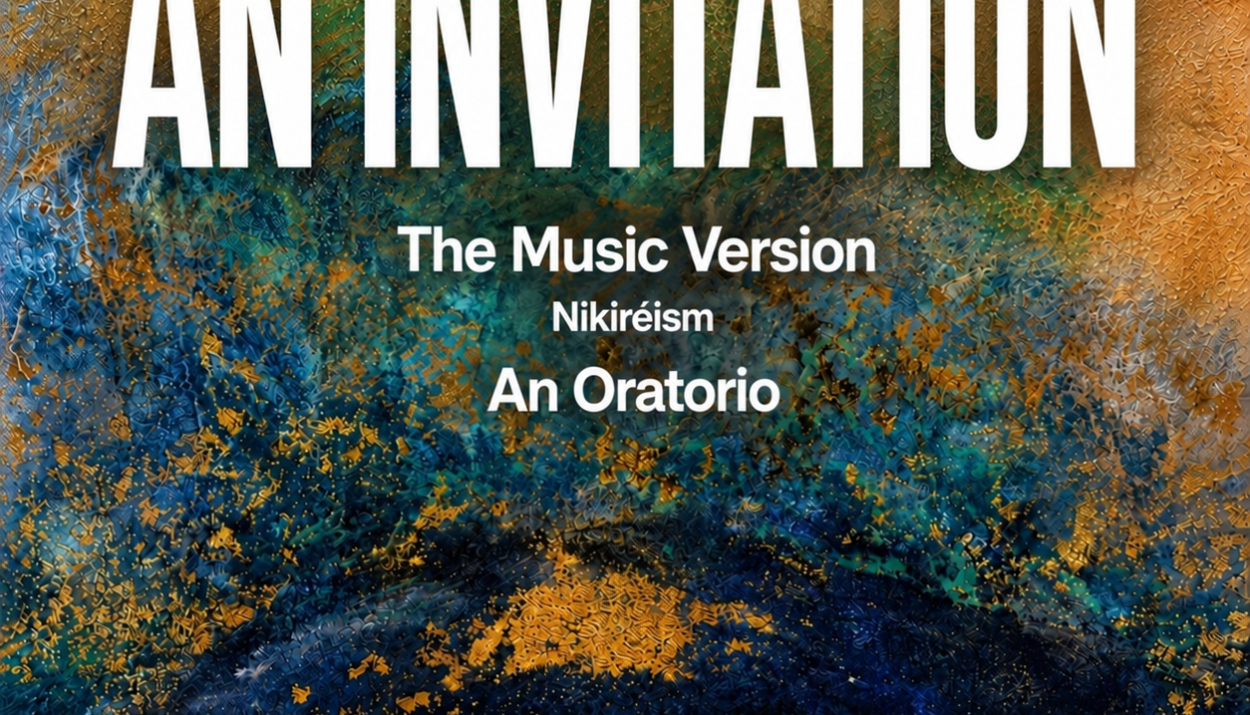

What if music could do more than entertain us? What if it could gently remind us who we are, what matters, and how much beauty lies in the simple act of being human? That’s the lovely idea at the heart of AN INVITATION, a thoughtful and ambitious musical project that aims to leave us with more than a collection of melodies. It wants to leave us with something to think about, something to feel, and perhaps something to carry into our everyday lives.
Presented as a contemporary oratorio, AN INVITATION is the musical expression of Nikiréism, a life philosophy created by Tom Arild Junge. Across twelve chapters, the album explores existence, spirituality, values, love, failure, forgiveness, relationships, and the importance of being present. These are big subjects, but the project approaches them with an open heart and an inviting spirit. Rather than telling us how to live, it encourages us to pause, look inward, and discover what our own values mean.
Before getting into the music, it is worthy to understand the creative mind behind this project. Nikiré is the musical messenger of Tom Arild Junge’s philosophical vision. It is not simply a musical identity built around songs; it represents a much wider creative undertaking that brings together philosophy, human-written lyrics, music, reflection, and artistic expression. Released on September 22, the album’s beauty lies in its twelve-part structure. Each song has its philosophical purpose, but together they form a larger story about existence and what it means to live a meaningful life.
“The Infinite Is Present (Chapter 1)” opens the album and immediately invites curiosity. This song introduces one of the project’s central ideas: the possibility of finding something much greater than ourselves within the experience of the present moment. Rather than treating infinity as something distant or unreachable, it encourages a different perspective. Perhaps the infinite is not somewhere far away. Perhaps it can be sensed in the simple experience of being alive, aware, and connected to the world around us. It is a fitting opening statement for an album that wants its listeners to slow down and reflect. The philosophical nature of the lyrics gives the music a sense of purpose, while the contemplative musical direction helps establish the atmosphere for the chapters that follow.
“The Soul Is Eternal (Chapter 2)” moves into more spiritual territory. This chapter considers the deeper nature of human existence and the idea that our inner essence may reach beyond the limitations of physical life. This subject has inspired philosophers, spiritual thinkers, and artists for centuries. Here, it becomes part of Nikiré’s wider exploration of identity, meaning, and consciousness. The song offers us room to consider what makes us who we are. Is our identity defined by what we see, what we own, or what we accomplish? Or is there something deeper that deserves our attention? Its reflective character fits naturally into the album’s developing philosophical narrative. It is not just about presenting an idea, but about encouraging a personal response.
With this wonderfully expansive title, the album turns its attention towards the universe, spirituality, and humanity’s place within something much greater. “The Eternal Universe Beneath the Stars of God (Chapter 3)” carries a sense of wonder. It invites us to look beyond our immediate concerns and consider the vastness of existence. The title suggests a meeting between the infinite universe and the human desire to understand its deeper meaning. The shift in this perspective is beautiful. Everyday problems can sometimes become so large in our minds that we forget how much more there is to experience and discover. The musical concept suggests scale, mystery, and contemplation, allowing the philosophical message to feel expansive rather than confined.
Chapter 4 brings the philosophy closer to everyday life. Titled “The Future Unfolds Through Presence,” it explores the relationship between the present moment and the possibilities that lie ahead. We spend so much time worrying about tomorrow, planning our next move, or thinking about what might have been yesterday. Yet the choices that shape our future are made in the present. That is the central thought behind this chapter, and it is a message worth revisiting. Being present is not about abandoning ambition or refusing to plan. It is about understanding that life is happening now, and that our future grows out of how we live today. The song adds an important practical dimension to the album. Nikiréism is not presented as an abstract collection of philosophical thoughts. It influences the way people actually live.
“Values Are Sacred (Chapter 5)” is arguably one of the most important statements in the entire project. This song places personal values firmly at the centre of the Nikiré philosophy. What do we stand for? What matters when nobody is watching? Do our actions reflect the things we claim to believe? These are simple questions, but answering them honestly can be difficult. The chapter reminds us that values are not decorations for our personalities. They are part of the foundation on which we build our lives. I particularly like the importance given to this subject within the album’s structure. It reinforces the idea that a meaningful life is not measured only by success, status, or possessions, but also by the principles we carry into our relationships and everyday decisions.
Love is one of music’s most familiar subjects, but Nikiré approaches it from an interesting starting point. “Love Begins Within (Chapter6) suggests that the way we relate to others is deeply connected to the relationship we have with ourselves. Before we can offer genuine understanding, compassion and acceptance, we must be willing to look honestly at our inner world. This is not a selfish understanding of love. Quite the opposite. It suggests that self-awareness can help us become more generous, patient and understanding towards other people. The chapter brings warmth to the album’s philosophical journey. Its message is accessible and universal, making it one of those songs whose central thought can stay with a listener long after the music has ended.
The seventh chapter, “Spiritual Awareness Gives Peace,” explores the relationship between spiritual awareness and inner peace. Spirituality is approached as an invitation to become more conscious of ourselves, our surroundings, and the deeper dimensions of life. In a noisy world filled with distractions, expectations, and constant demands, finding peace can feel like a difficult task. This chapter suggests that peace is not necessarily something we need to search for outside ourselves. It may begin with greater awareness and a more thoughtful relationship with life. The album’s contemplative character makes this subject a natural fit. It also adds another layer to the wider philosophy, showing how personal awareness, values, and inner direction can work together.
Now, Chapter 8 is a wonderfully honest title! Titled “To Be Human Is To Fail And Reflect,” it takes a subject that many people would rather avoid and gives it an important place in the album. Failure is part of being human. We make mistakes, misunderstand situations, hurt people, make poor decisions, and sometimes discover that we were completely wrong. But what happens next matters. The important message here is that failure does not have to define us. Reflection allows us to learn, take responsibility, and grow. It is about accepting our imperfections without giving up on becoming better human beings. I appreciate the honesty of this idea. Too much of modern life encourages us to present a perfect version of ourselves. Nikiré offers a gentler and more realistic alternative: accept that you are human, learn from your mistakes, and keep moving forward. It is a valuable message, and perhaps one of the most relatable chapters in the collection.
“Harmony Is Practice (Chapter 9)” takes another familiar ideal and gives it a practical meaning. Harmony does not just happen because people wish for it. It requires effort, patience, awareness, and a willingness to understand different perspectives. The chapter fits beautifully with the album’s emphasis on lived values. It is easy to speak about peace, kindness, and understanding, but practising them when situations become difficult is another matter entirely. Harmony is built through everyday choices. It is found in how we listen, communicate, disagree, and make room for one another. This is an important distinction, and it gives the song a meaningful role in the overall narrative. It moves the philosophy from individual reflection towards the wider human community.
Human relationships are at the centre of Chapter 10. “Relation Is Sacred” explores the value of connection and the importance of recognising the human significance of the people we encounter. Relationships are not simply convenient arrangements or passing experiences. They shape our understanding of ourselves and influence the way we experience the world. The word sacred gives the subject an additional sense of importance. It suggests that human connection deserves care, respect, and attention. This chapter also connects naturally with the earlier ideas about love, values, and harmony. It reminds us that a philosophy of life cannot be complete if it only concerns the individual. How we treat other people is just as important as what we discover within ourselves.
If the previous chapter introduces the sacred nature of human connection, Chapter 11 takes the thought even further. “Relationship Is The Real Meaning In The Universe” is perhaps the album’s boldest statement about the importance of connection. It proposes that relationships are not merely one part of life, but may be central to the meaning we discover within existence itself. It is a fascinating idea. We often measure life through individual achievements, possessions, and personal milestones. Yet many of our most meaningful experiences come from the connections we build with others. Love, friendship, understanding, trust, and shared experiences give life much of its emotional richness. The chapter brings the album’s humanistic philosophy into particularly clear focus. It suggests that meaning is not something we create entirely alone. It also emerges through the ways we meet, recognise and influence one another.
The final, “Resonance Within (Chapter 12), provides a fitting destination for this twelve-part journey. After exploring existence, spirituality, values, love, awareness, failure, harmony, and relationships, the album returns to the inner self. Resonance suggests a feeling of connection, recognition, and alignment. It is that moment when something outside us seems to awaken something meaningful within us. As a closing statement, it brings the listener back to the importance of personal reflection. We can encounter ideas, listen to different perspectives, and learn from other people, but ultimately we must discover what resonates with our values. It is a thoughtful way to conclude the oratorio. Rather than simply providing a final answer, the chapter leaves room for the listener to continue the journey independently.
The vocal performances are an important part of the album’s identity. They serve the words and their meaning, rather than simply aiming for vocal showmanship. The delivery is contemplative and expressive, giving the lyrics the character of a musical reflection. This approach works particularly well for an oratorio where the philosophical message is just as important as the melody.
The production leans towards ambient and cinematic territory, using atmospheric textures and arrangements to create a sense of depth and movement. Rather than crowding the philosophical lyrics, the instrumentation provides a musical landscape around them. The overall sound is designed to encourage attentive listening, with a spacious quality that suits the album’s spiritual and reflective themes. The use of Suno as a production tool is also part of the project’s creative identity. What matters here is the artistic vision behind the finished work: the human-written words, the philosophy, the choices made during production, and the selection of musical results that best communicate the intended message.
Overall, “AN INVITATION” is an unusual and ambitious project, and that is part of its charm. It asks big questions without turning the listening experience into a lecture. Instead, it uses music as a gentle companion to reflection. Nikiré is more than an artist name. It is the musical messenger of Tom Arild Junge’s wider philosophy, with around 40 additional songs exploring love, forgiveness, dignity, vulnerability, values, and human connection. If you enjoy ambient, cinematic, and spiritually minded music with a deeper message, there’s a lot this album will offer for you. My favourite thing about the concept is its simple but meaningful reminder: we do not just think about our values; we live them. And perhaps that is the sweetest thing about this invitation. It does not ask us to become perfect, only to become a little more present, a little more understanding, and a little more human. AN INVITATION is music with a message, a philosophy with a heartbeat, and a lovely reminder that the most meaningful journey may be the one taking place within us.
Listen to the “AN INVITATION” album on Spotify
Follow Nikiré here for more information