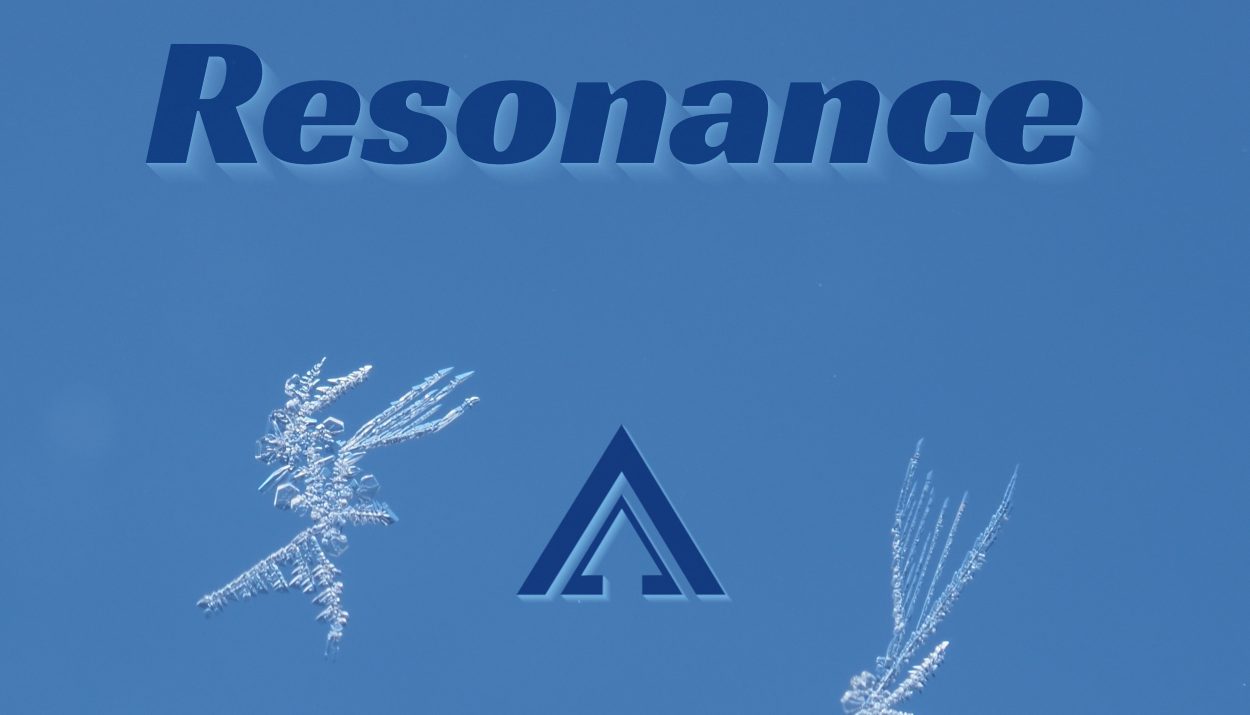

Alimba, also known as Spiros Aliprantis, comes here not just as a producer but also as a storyteller who creates a unique vibe and atmosphere. He is an electronic composer who knows that a great track does not just move the body; it evokes distance, wonder, longing, and return. His earlier music leaned toward cinematic soundscapes and emotional drift, featuring pad textures that felt like starlight and controlled drum rhythms. On Resonance, he confidently ventures into full dance territory, resulting in a transformation rather than a departure. This is not merely an album aimed at the club; it reaches for memory, trance, and that rare place where rhythm and emotion blend seamlessly.
The title fits perfectly. “Resonance” does more than refer to synth sounds; it captures the album’s core concept. These tracks do not just play; they vibrate, echo, and transmit energy, allowing it to blossom in the listener’s heart. The album embraces the spirit of 90s trance while maintaining a modern polish that keeps the sound fresh. The atmosphere remains crucial but is now enhanced by a stronger pulse, sharper basslines, and a clearer sense of lift. It seems as if Alimba has taught the emotional language of his earlier work how to dance.
The opening track, “Dream State,” serves as a gateway into the album’s world. It sets the mood with a soft, expansive glow, using atmosphere to prepare listeners for movement. The title fits: this music feels half-awake, suspended between imagination and momentum. The pads are wide and immersive, and the rhythm arrives patiently, like a heartbeat gradually finding its confidence. As an introduction, it works beautifully; it reminds us that trance is not just about repetition but also about surrender.
This collaboration, “Kalispera” with Andy Rodrigues, feels like one of the album’s most accessible and contemporary moments. “Kalispera” has a warm, human quality beneath its driving beat, making it stand out. It balances classic trance structure with a more modern rhythmic and melodic touch. The track feels welcoming, almost conversational, greeting the listener at night with open arms. It clearly shows how Alimba connects emotion and movement without sacrificing either.
“Need For Speed” shifts the album into a more urgent lane. The title implies acceleration, and the music follows that instinct with driving bass and a sense of forward momentum. What stands out is how energy feels like control rather than chaos. Instead of racing thoughtlessly, the track channels speed into structure. It makes the entire album feel larger, as if the journey suddenly opens onto a faster road.
“Evolution” is one of the album’s conceptually significant tracks. It suggests change, growth, and the natural unfolding of style. Within the album, it sounds like a statement of purpose: Alimba isn’t repeating himself but expanding his range. The track relies on gradual development, building tension through layering instead of sudden impact. That patience gives it depth. It feels thoughtful, like a chapter where the artist pauses to highlight how far the journey has come.
This is where the album becomes particularly tactile. “Senses” suggests a richer, embodied form of trance, one that is not just heard but felt through texture and vibration. The atmospheric elements likely shimmer around the rhythmic core, creating an immersive, physical experience. This piece works because it does not overstate itself; it allows sound design to carry the emotional weight. The outcome is elegant and very listenable.
Here, the album takes a darker turn, adding welcome contrast. “Dark Legion” is heavier, more dramatic, and perhaps more cinematic than the previous tracks. The title suggests power, tension, and a nearly mythic energy. In a trance album, this darker movement is essential to avoid uniformity. This track likely gives the bass more presence and the pads a colder edge, creating a sense of scale and intensity. It’s one of those moments where the album feels especially commanding.
After the weight of “Dark Legion”, “Sea Waves” offers a sense of release. The title implies fluidity and a more natural flow of movement compared to the mechanical drive of other tracks. Here, Alimba’s atmospheric instincts likely shine the brightest. One can envision soft synth oscillations, gradual rises and falls, and a sense of breathing embedded in the arrangement. It reminds us that trance can be both energetic and restorative. This track may provide one of the album’s most beautiful moments of calming momentum.
“Zero G” is a striking title for a trance track, fitting Alimba’s space-minded roots. This piece feels like weightlessness expressed through rhythm. The pads likely expand into a broader sonic field, and the bass may pulse with a floating quality rather than a driving one. The track conveys lift rather than gravity. It’s a clear expression of the album’s cosmic side, where dance music becomes a vehicle for drifting beyond the ordinary.
As an extended mix, this track likely allows the album to breathe. “Sculptor” is an apt title, suggesting the careful shaping of sound. In trance, long-form development matters, and this piece probably respects that tradition by building gradually, refining themes, and letting the groove evolve in layers. It feels designed for deep immersion, rewarding patience, and giving the listener a stronger sense of arrival.
The closing bonus track offers a final nod to the album’s celestial identity. “Triangulum” evokes stars and distance, along with the kind of melodic spaciousness that can make trance feel almost spiritual. As a remix, it likely carries the album’s core identity into a slightly different shape, infusing the closing stretch with a sense of motion beyond the main sequence. It provides a fitting conclusion, feeling expansive rather than simply conclusive. The album drifts outward rather than ending abruptly.
What makes “Resonance” satisfying is the consistency of Alimba’s artistic delivery. He does not force drama where atmosphere is enough, nor does he overdecorate when a groove can speak for itself. His work as a producer feels disciplined and emotionally aware. The album exudes confidence, but it is a subtle kind, built on control, taste, and a clear understanding of trance’s emotional mechanics.
There is a strong sense of pacing throughout. The album moves with intention, alternating between lift, drive, shadow, and release. This reflects mature storytelling. Even when the tracks are energetic, they never feel empty. Even in their atmospheric moments, they never stagnate. The music feels alive, constantly in conversation with itself.
The production on Resonance appears to be built on contrast: atmospheric pads against dynamic bass lines, nostalgic trance gestures against modern clarity, and melodic openness against rhythmic firmness. This combination is one of the album’s significant strengths. The pads provide emotional depth, the drums create movement, and the basslines give the tracks their backbone. Together, they craft a sound that feels both retro and current.
Listening to Resonance feels like witnessing an artist fully transition into a new form. Alimba blends sky, body, memory, and momentum in a way that seems both personal and generous. The album is dance music, yes, but it also embodies mood, structure, and emotion in motion. It invites the listener in and takes them somewhere brighter.
Overall, the album gives the impression of a creator who knows exactly what he wants his sound to be: expansive, rhythmic, melodic, and emotionally resonant. Resonance is not just a debut album; it is a statement of arrival. Alimba deserves not just polite applause but genuine recognition because this work marks an artist capable of making trance feel timeless again.
Listen to the “Resonance” album on Spotify
Follow Alimba here for more information