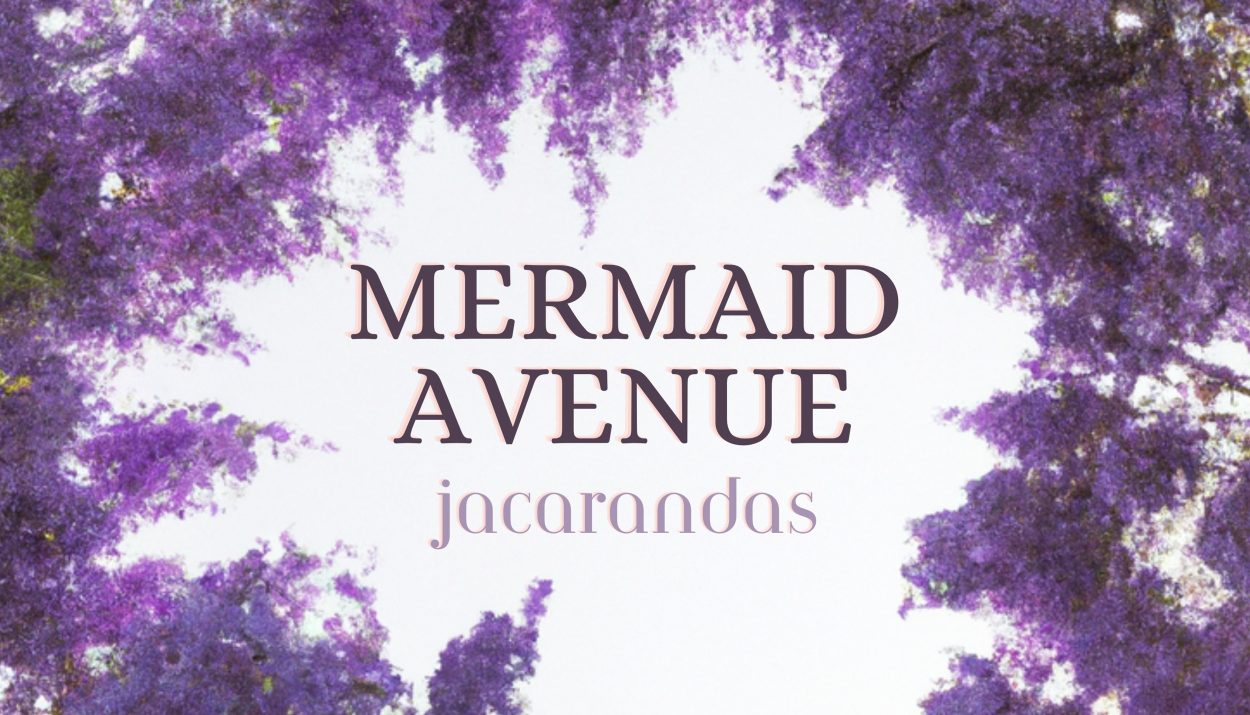

Mermaid Avenue arrives on “Jacarandas” with a confidence built from years of performing for real audiences, in real spaces, with nothing to hide behind. The Brisbane five-piece has long navigated the blend between indie rock and alt-country, but here they sound assured. Fronted by Peter Clarke, whose songwriting combines grit and tenderness, the band demonstrates a knack for allowing a song to breathe. They don’t rush the emotions or force the drama. They trust the details, the ache, and the aftermath.
This trust pays off across a personal album without being small. “Jacarandas” is filled with songs about longing, regret, memory, deceit, family, and the complex emotions that come with adulthood. The writing is clear and lived-in, often striking in plain view. Clarke’s vocals play a key role in the album’s power: warm and understated, he sings like someone finally confronting the truth after a long time of avoidance. The band builds a grounded and expansive sound, combining electric and acoustic guitars, lap steel, pedal steel, keys, bass, drums, harmony vocals, and the occasional fiddle into authentic and cinematic arrangements.
The album opens a window into a world where feelings are rarely straightforward, and each song feels like a scene from a life you almost recognise as yours.
“Talk Pretty” stands out as one of the album’s sharpest tracks, a song about manipulation disguised as affection. The line “My crows’ feet were settings for diamonds” captures how flattery can become a weapon in a particularly cruel way. “Now I know you were kissing through a veil” hits hard as the moment an illusion shatters, and the relationship comes to light. Clarke’s delivery is controlled and weary, which amplifies the impact of the accusation. The band maintains a moody and understated arrangement, letting the song’s bitterness simmer rather than overflow. It has elegance, but that elegance carries weight.
“First Move” finds itself in emotional limbo as it watches a relationship quietly unravel without either person being able to acknowledge it. Lines like “We are withering on the vine” and “circling each other from afar” deeply embody distance. Clarke sings with a wounded control that fits the song’s uncertainty. The production captures this beautifully. It feels like a late-night confession under a dim light, where every word is carefully chosen because too much honesty might break the moment.
The title track, “Jacarandas,” serves as the record’s emotional core. It turns the blooming tree into a symbol of memory, grief, and the painful return of what can’t be reclaimed. “Jacarandas are out in bloom. “One more time I long for you” is simple, yet Clarke makes it resonate with a whole emotional landscape. The song exists in a space between beauty and regret. “We built a home. A wall of glass looking to the south hints at fragility from the start, a structure meant to be admired but also feared. Vocally, the performance is tender and unforced, echoing quiet exhaustion. The arrangement is warm and reflective, with instrumentation that glows gently instead of overwhelming. It’s a heartbreak song that understands beauty doesn’t erase pain; sometimes, it sharpens it.
“More Than This” represents one of the album’s loneliest moments, soaked in distance and unresolved guilt. “I got the blues tonight. Something ain’t quite right” sets the initial tone, but it’s the ache underneath that stays. “I wish I were in your bed” and “The sadness I hear in your voice. The happiness I know you deserve” illustrates a narrator keenly aware of his powerlessness, making the song hit harder. Clarke sings with understated sincerity, avoiding grand emotional gestures. The band supports with warm, melancholy sounds and subtle percussion, creating a drifting, almost suspended feeling. The song evokes watching the night transition into morning without any resolution.
“The Bigger They Are (The Harder They Fall)” expands the emotional focus. It’s rooted in memory, family, and sport, yet it becomes something grander: a song about time, tradition, and how modern life can strip meaning from once-sacred rituals. Phrases like “You’d by the fence. To watch me try” and “Grandad, you and I. Cushions on the bench” add tenderness and authenticity. The refrain, “The bigger they are, the harder they fall,” serves as sports wisdom and a reflection on mortality and change. Clarke’s steady and sincere delivery, combined with the band’s earthy, roots-driven looseness, keeps the song grounded in real experiences. It feels nostalgic without veering into sentimentality, a challenging balance to maintain.
“She’ll Come Down When She’s Ready” captures the essence of waiting in all its emotional awkwardness. “One more step to her door. Summon the nerve you have” instantly places you in the narrator’s anxious perspective, while “A brand new collar. Sandpaper on your neck” cleverly uses discomfort as a metaphor without making it obvious. The repeated refrain becomes a self-soothing cry and a source of torment. Clarke’s vocals here resonate because he avoids melodrama; the song feels more painful because he struggles to keep it hidden. The arrangement is gentle and patient, featuring soft percussion and warm guitars that allow the tension to linger.
“Imagine Ruth” feels more open, searching, and hopeful than the surrounding songs, even though that hope is delicate. The figure of Ruth serves as an internal guide or imagined comfort, and the line “She took my hand and showed me the clouds just hide blue sky” beautifully captures the song’s emotional purpose. It reminds us that grief and uncertainty are not the entirety of the sky. Clarke’s vocals are intimate and low-key, almost conversational, which gives the repeated “Imagine, imagine, she will be” a mesmerising quality. The production is dreamlike and gently soft, with atmospheric textures that allow the song to float instead of land heavily. It ranks as one of the album’s softest and most sustaining songs.
“Better Not To Know” sharpens the focus on suspicion and loneliness. “You said you’d be home. “3 hours ago” hits with immediate, relatable realism, and “3 am”, I thought. I will check our account,” adds a chilling contemporary detail to the old pain of mistrust. The song reveals how betrayal often resides in the small, obsessive spaces between facts. Clarke’s tone is quiet but filled with nervous energy, and that tension gives the song its heartbeat. The production is minimal and shadowy, layered with melancholic guitar work and muted percussion, making the emotional discomfort feel even closer. It doesn’t explode; instead, it quietly unravels.
“My Sympathy” ranks among the album’s bleakest tracks, yet it retains its humanity. “Sunday morning, when I wake up. You’re not there” strikes with raw simplicity, and the refrain “This ain’t love. You just take advantage of it. My sympathy expresses the emotional injury with harsh clarity. The image of “empty bottles break as gravity always wins” gives the song a visceral despair, a sense of emotional and physical collapse. Clarke sings with a genuine weariness that makes the pain feel authentic rather than performed. The band keeps the arrangement gritty and grounded, with moody guitars and sparse melodies that suit the song’s emotional deterioration. It paints a raw, unglamorous picture of being worn down by someone you still care about.
The album concludes with “Boy in the Mirror (Feat. Melinda Coles)”, a powerful closing piece. The song’s journey from childhood innocence to adult regret is managed with great sensitivity. “No shoes on his feet. “Chasing the bad guys down the street” introduces a boy full of energy and imagination, but the emotional landscape darkens as the song progresses. The refrain, “Boy in the mirror, hope you don’t see the man that became of me,” is heartbreaking in its honesty; it expresses shame, fear, and painful truth. Clarke performs with a weathered intimacy that matches the song’s depth, while Melinda Coles’s fiddle adds a haunted, almost ancestral sadness that lingers. The arrangement is sparse but profoundly affecting, allowing every phrase to carry its burden. It feels like a memory evolving into confession.
Overall, “Jacarandas” is an emotionally powerful album because it recognises that the strongest feelings are often the quietest ones. Mermaid Avenue writes about heartbreak, uncertainty, and memory with careful precision, but what makes the album special is the way the band performs that material: never overstated, never detached, always emotionally present. The production is warm and spacious, the instrumentation rich but never crowded, and the vocals carry the kind of weary grace that only comes from songs lived with, not merely sung.
By the end, I did not feel like I had just heard an album. I felt like I had spent time inside a set of private weather systems, where tenderness and regret kept passing through the same sky. “Jacarandas” is beautifully made, quietly devastating, and full of songs that stay with you because they sound like they were written with the lights low and the heart fully open.
Listen to the “Jacarandas” album on Spotify
You can follow Mermaid Avenue here for more information.