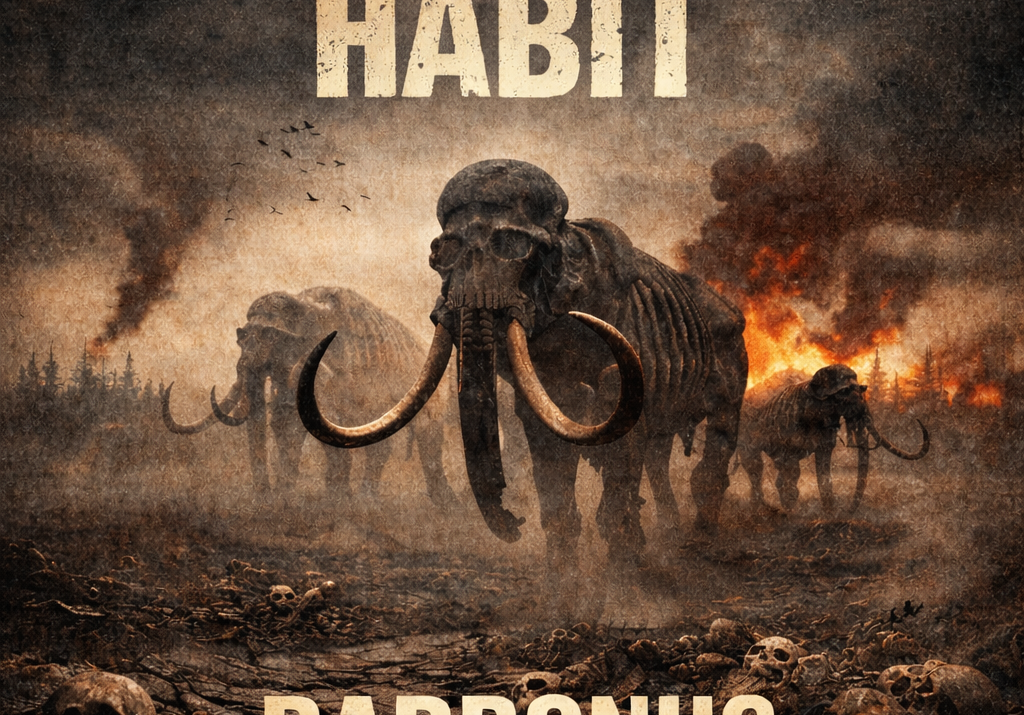

Today, on our blog, a good album has arrived in the form of ‘HABIT.’Presented to us by Barbonus, he’s a Freiburg, Germany-based artist who works where electronic music meets story-first songwriting, and that mix gives his music a strong identity. He does not write songs that rush to impress. He builds them slowly, like rooms filled with memory, tension, and thought. His work feels shaped by time, and HABIT proves that he knows how to turn inner life into sound with patience and care.
Out on May 22, this release is a full-length work made of ten synth-driven songs. It looks at routine, pressure, silence, and the small acts of resistance that keep a person going. The album does not chase drama. It lives in the spaces where people keep moving, even when they feel worn down. That choice gives the album its power. It feels honest, measured, and deeply human.
“No Agreement” opens the album with a sense of tension that never fully resolves. The title suggests refusal, distance, and a break in trust. The song feels like the start of a personal state rather than a loud protest. It sets the tone for the whole record by showing that this album is not about victory. It is about living through mismatch and about the quiet cost of staying alert in a world that keeps asking for compliance.
The second song, “Behind the Door,” feels more private and inward. The title suggests secrecy, retreat, and the life that happens out of sight. The track moves like a closed room: controlled, tense, and full of unspoken feeling. It connects to the album’s interest in silence. Silence here is not peace. It is something active and guarded. The song asks what people keep from each other and what they keep from themselves.
“Overfed with Nothing” is one of the sharpest titles on the album and sounds like a direct cut into modern emptiness. It captures the feeling of being flooded with content, tasks, images, and pressure while still feeling starved. That idea fits the album’s larger view of overstimulation and performance culture. The song uses repetition and control to mirror the cycle of too much and too little at once. It is a strong piece because the title alone already holds a clear emotional truth.
“Silence,” to me, is the most stripped-back emotional center of the album. A song with this title often becomes a blank space, but in Barbonus’s hands, it has become a study in pressure, distance, and unspoken thought. Silence is never only absence. On this record, it is memory, fear, and endurance. The track uses the production to make it feel quiet and active, even restless.
“Africa Will” stands out because it opens outward differently. The title suggests movement, hope, and unfinished thought. It feels less enclosed than the earlier songs, though still shaped by the album’s calm control. The phrase “will” gives it a sense of future energy, but not certainty. That uncertainty suits the album well. It keeps hope from becoming simple or neat.
“Sirens” brings in a sharper edge. Sirens can mean warning, danger, urgency, or even the pull of something hard to resist. In the context of HABIT, the song turns that image into pressure from outside the self. It feels like an alarm running beneath the surface, a reminder that the world does not stay still just because a person wants quiet. This track adds more tension to the album’s emotional arc.
“From Pontius to Pilate” carries a strong sense of movement without real change. The phrase suggests passing responsibility, avoidance, and a circle of refusal. It fits very well with an album about routine and social pressure because it points to a system where people keep shifting blame rather than facing the truth. Musically, the song feels steady and controlled, letting the title’s meaning do much of the work.
The album’s eighth track, “Roadside,” feels like a pause point. It suggests being between places, not fully home, not fully gone. That in-between feeling matches the album’s emotional logic. The roadside is where movement stops for a moment and where thoughts get louder. This song carries a lonely, reflective mood, with synth lines that feel suspended rather than driving forward.
“I Stay in Bed” is one of the most direct and memorable songs on the album. It turns withdrawal into something plain, almost practical, rather than shameful. That choice is brave and sharp. The song reframes what many people call laziness as a response to the empty productivity culture. It is not a pose. It is a survival logic. This track is the album’s clearest example of Barbonus’s skill with writing that feels simple on the surface but deep in meaning.
“From Midnight till Dawn” brings the album toward its emotional close with a sense of long night and slow endurance. The title suggests the hours when thoughts become harder to avoid and when hope feels thin but still present. It belongs to the album’s quieter emotional line: not triumph, but staying. The track moves with a beautiful pulse, carrying listeners through darkness without pretending to solve it.
Lastly, “Still Hoping (Just a New Year’s Song)” is the closing statement, and it lands with real grace. The title already tells us that the hope here is fragile, almost modest, but still alive. The phrase “just a New Year’s Song” gives it a human, almost ordinary shape, which makes it more touching. Barbonus does not end the album with a grand release. He ends with persistence. That is the right choice for an album about adaptation, pressure, and quiet resistance. The hope here is not loud, but it lasts.
The most attractive thing about this album is that every song has a different story and composition. Barbonus uses synth textures that stay controlled and clean but are never empty. The production holds back on purpose. It gives each song room to breathe, which makes the lyrical ideas hit harder. His vocals match the mood. He does not oversing or push for big moments. Instead, his delivery feels measured, dry in places, and emotionally careful. That fits the album’s themes perfectly. That kind of performance is powerful. It keeps the songs grounded and lets the words carry their force.
This is an album for anyone who has felt worn down by routine, expectations, and the strange pressure to keep performing even when nothing inside feels ready. Barbonus turns that feeling into music with care, intelligence, and emotional precision. HABIT is quiet, but it stays with you. With a beautiful choice of chords and elegant songwriting, HABIT is a perfect album and will ask anyone to revisit it after their initial listens.
Listen to the “HABIT” album on Spotify
Follow Barbonus here for more information