
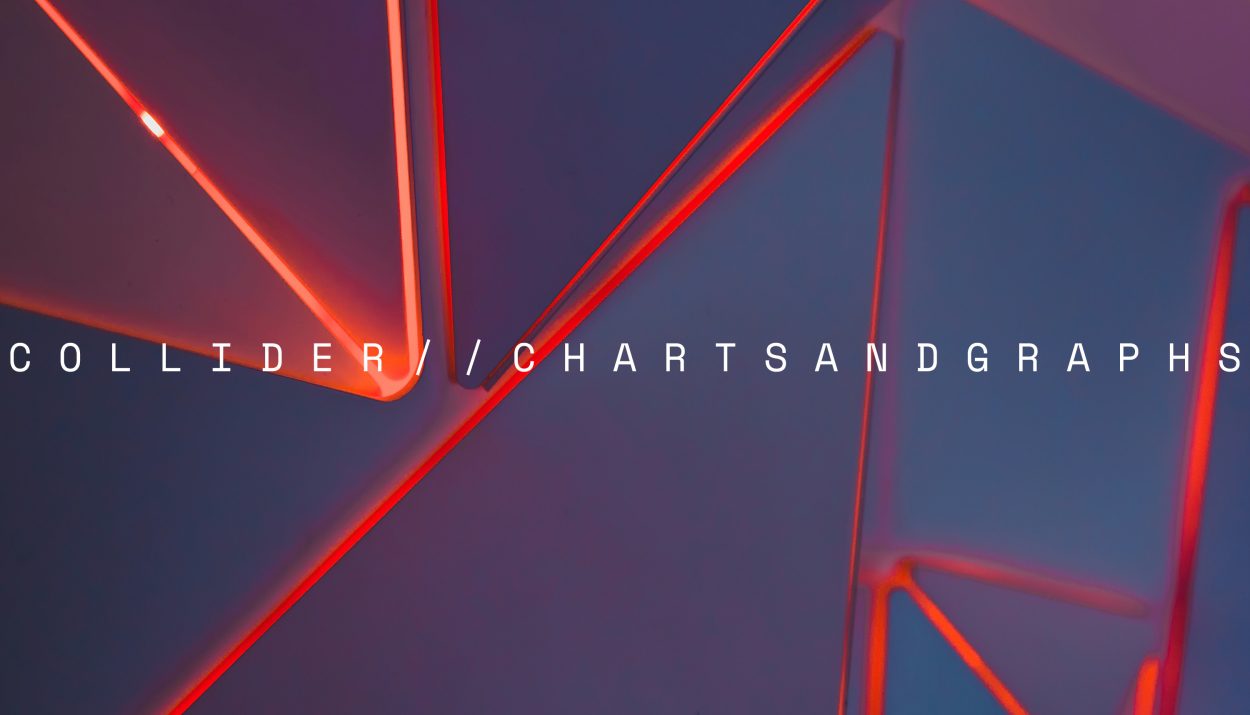

Post-punk gets a fresh shot of adrenaline with “Collider,” the new album from Charts and Graphs, a band that makes modern life sound wonderfully uncomfortable. Imagine Talking Heads colliding with Gang of Four, Devo’s twitchy eccentricity meeting LCD Soundsystem’s dance-floor persistence, and you begin to understand the delicious madness at work here. Let’s give this band a proper and beautiful welcome. Charts and Graphs have arrived with something to say, and they would rather make you move than let you sit comfortably as you hear it.
Out on September 25, 2026, “Collider” is a sharp, restless collection of songs that examines consumer culture, social conformity, alienation, and fractured identity. Its brilliance lies in the difference between music that demands movement and lyrics that question the world doing the moving. The grooves are infectious, but the unease never disappears. The album is made of eight songs and a total runtime of twenty-one minutes and twenty-four seconds and has exactly what it takes to catch attention in an instant. Stay with me on this track-by-track journey.
“Collider Pt.1” opens the album like a machine powering up, introducing the tension and nervous energy that shape everything that follows. Rather than offering a grand introduction, it establishes a feeling of collision: competing thoughts, fragmented impressions, and a world preparing to come apart. It is a fitting doorway into the record’s strange, restless universe.
“Isolation,” the first single, delivers the album’s anxiety in a lean, tightly wound burst of post-punk. Mechanical rhythms and stabbing guitars create a sense of confinement, while Dan’s vocal delivery feels urgent and deeply unsettled. The lyrics explore alienation and exhaustion, capturing that frightening moment when surrender begins to seem easier than continuing. The track hits hard without overplaying its hand, turning emotional distress into a groove that refuses to let go.
Consumer culture comes under the microscope as the album turns an everyday commercial phrase into something quietly disturbing in “Valuable Customer.” The title suggests a society that measures people by their usefulness, spending power, and willingness to follow the script. The band’s angular musical language makes this criticism feel playful on the surface but pointed underneath. It is a clever reminder that modern absurdity often arrives dressed in perfectly ordinary language.
When we get to “Disconnect,” the emotional distance between people takes centre stage. Connection is everywhere, yet genuine closeness remains frustratingly elusive. The song’s place within the album’s repetitive, tightly wound musical framework reinforces the sense of being trapped in a loop: functioning, responding, and carrying on without quite feeling present. Its central idea speaks directly to the fractured identities and quiet disconnection of contemporary life.
The title, “Don’t Hesitate,” sounds like an instruction, but it also raises a question: who benefits when everyone is expected to move faster, decide immediately, and never stop to think? The track fits the album’s fascination with commands, repetition, and the strange authority of familiar phrases. Its natural home is in the record’s urgent, clipped world, where language can become another machine demanding obedience.
With a title this direct, the focus shifts towards the people caught inside the systems the album has been examining in ”Humans.” Social conformity, contradictory behaviour and the struggle to maintain an authentic identity all come into view. The band’s taste for Byrne-esque vocal rants and twitching, Devo-inspired melodies suits this subject perfectly. Humanity becomes the question and the punchline, delivered with enough nervous wit to prevent the record’s darker observations from becoming heavy-handed.
The album’s longest-titled destination evokes the strange, repetitive rhythm of life after dark: artificial light, familiar routines and the feeling of being awake while everything else seems suspended. “All Night Garage” opens up a world of ordinary details that become increasingly strange when viewed through the album’s anxious lens. Here, the band’s insistent grooves and looping rhythmic instincts feel particularly suited to a setting where time passes, but little seems to change.
With “Collider Pt.2” as the closing chapter, we return to the album’s central idea of collision, bringing the record full circle without pretending that its problems have been solved. After isolation, consumerism, disconnection, and conformity, the world still feels gloriously out of joint. The return to the Collider name gives the ending a sense of accumulated tension, as if all the album’s fragments have finally crashed into one another.
One of the album’s most interesting qualities comes from how it was recorded. Dan and Ross began building Collider in Dan’s basement while the band was between drummers. They turned to live drum samples and drum machines to establish the foundations of the songs, transforming a practical solution into a defining part of the record’s identity. The production thrives on that combination of human energy and mechanical precision. The bass sits proudly up front, grounding the music with a growling insistence. Guitars jerk, twist and stab at unexpected angles, while the drums drive, skip and loop with an almost hypnotic persistence. Synths add flashes of colour alongside a colder, digital gloom, giving the songs movement and atmosphere. The overall production of “Collider” is flawless. Every intricate sonic element is clearly heard with utmost clarity. This is another reason amongst many for which we will love this album
Of all the album’s appealing elements, the vocals can’t be compared to. Dan’s vocals are central to the album’s personality. They are mesmerizing, and his delivery favours nervous intensity, sharp observations, and rant-like expression over polished theatricality. The voice feels restless, as though it is trying to make sense of the absurdity even while caught inside it. That tension between vocal agitation and disciplined rhythms gives the music much of its bite. His vocal texture, quality, and artistic sensibility make the voice stand out and sound appealing to listeners.
“Collider” is a beautiful reminder that post-punk can still mutate, challenge, and surprise. Charts and Graphs draw on familiar influences without allowing nostalgia to become the destination. Instead, they turn jagged guitars, muscular basslines, machine-driven rhythms, and fragmented observations into a soundtrack for a world increasingly difficult to understand. The album’s greatest strength is its refusal to choose between thought and movement. It makes you dance while asking what, exactly, you are dancing through. With this record, Charts and Graphs are worthy of a standing ovation. They deserve an open door, a loud room, and an audience ready to meet them at full volume.
Listen to the “Collider” album on Spotify
Follow Charts and Graphs on Instagram