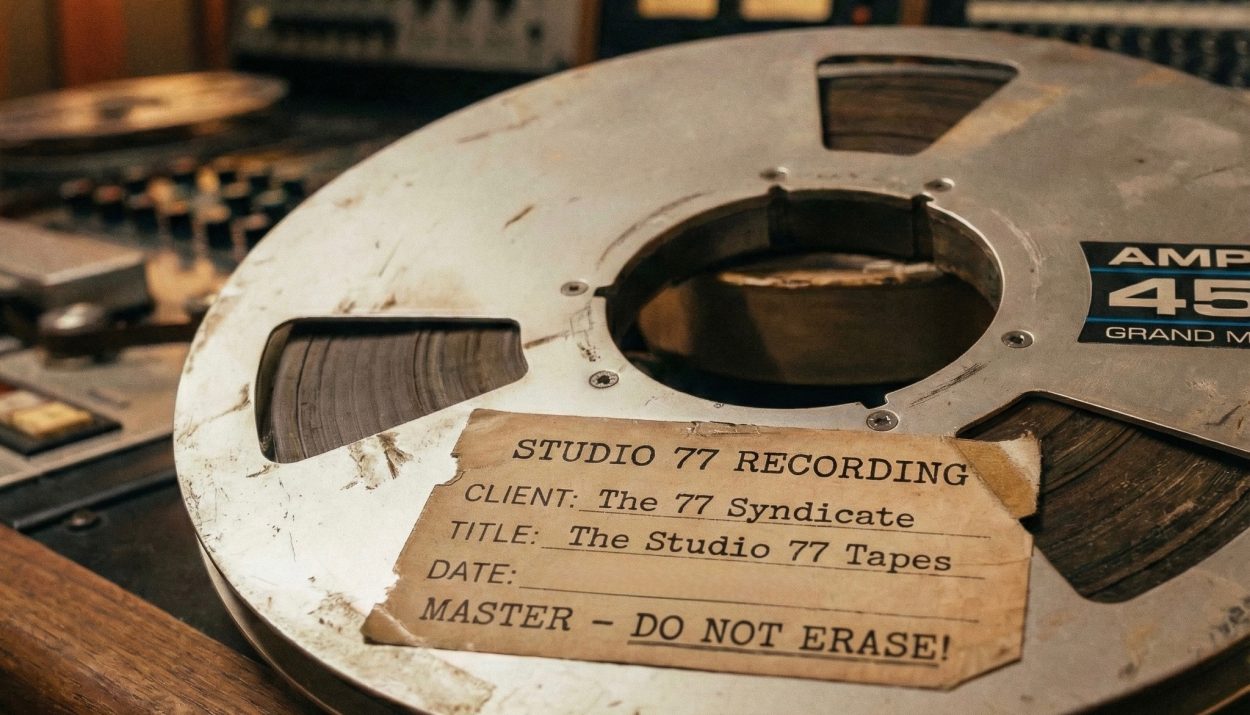

Some albums feel released. Others feel unearthed. “The Studio 77 Tapes” by The 77 Syndicate & Rowen Shore is definitely in the second category. Released on January 1, 2026, this record brings back a moment, a space, and a shared act of quiet rebellion. And oh, if you’re wondering who The 77 Syndicate are, they weren’t meant to be a named band. They were Chicago’s top session musicians, the unseen talent behind radio hits, TV themes, and perfect major-label singles. By night, they broke free from constraints. In an unmarked warehouse known only as Lot 77, they gathered to jam, debate rhythms, and chase grooves that ignored charts and contracts.
And now, Rowen Shore is the reason we can enjoy this music. He is a modern, melancholic lo-fi artist barely keeping his home studio running. Shore came across the tapes not as a curator, but as a scavenger. He needed tape and discovered something electrifying. To his credit, Shore didn’t clean it up. He didn’t over-polish or dull the edge. Instead, he listened, restored, and respected—and then stepped back. His role here is part archivist, part medium, and part witness. SongWeb, meet an album that risked everything to exist. Let’s get into it!
With “Boom! Shake My Groove,” the album starts confidently. This track bursts with energy: polished funk with a disco twist. The rhythm section is tight and playful, while the vocals glide smoothly, inviting movement without forcing it. It feels like the warehouse lights are still mostly on, with musicians warming up, smiling, and testing each other’s instincts.
In “Heat Me Up,” the mood intensifies. The bass digs in deeper, and the drums become heavier. The vocals show more urgency—phrases stretch and strain, hinting at grit. The performance suggests a release: musicians finally playing for their own enjoyment.
The next track is “Get On That Floor,” a call-and-response anthem built for dancing. The vocals are strong but relaxed, encouraging everyone to move together. The groove is relentless, with guitar and keys swirling around the rhythm like sparks. This is disco shedding its sequins and showing its strength.
Following that, “Tonight Is Ours” feels romantic, defiant, and subtly political. The vocals soften, embracing melody and intimacy, but there’s an underlying sense of resistance. The band enhances the track with lush chords and restrained horns. It’s a love song, yes, but also a declaration of claiming stolen moments.
The fifth track, “Light Up the Night,” shines. The arrangement opens up, allowing space and repetition to shine. The vocals feel celebratory, almost communal, as if the room itself is singing back. The disco vibe is strong here, but it’s beginning to loop towards something more hypnotic.
One of the album’s most moving moments, “Satin in the Crosswalk,” is smooth, stylish, and atmospheric. The vocal delivery is sultry and observational, while the band creates the setting with delicate textures. It’s late-night Chicago, with streetlights reflecting off worn pavement.
Next, “Blackroom Groove” turns darker, heavier, and more insistent. The bassline takes charge, the drums become more mechanical, and the vocals shift into a rhythmic chant. This track marks the point where disco starts to dissolve—and house begins to emerge.
Then there’s “Midnight Christmas Groove,” an odd and brilliant outlier. It’s funky, ironic, and oddly joyful, capturing musicians entertaining themselves after hours. The performance is playful yet tight, showing the depth of their chemistry.
Intimate and soulful, “Baby Tonight” steps away from the group dynamic to focus on connection. The vocal delivery is tender, almost whispered at times, while the band provides warm support. It reminds us that a groove can be gentle without losing its strength.
With “Burn My Name,” we reach the album’s emotional core and its most explosive statement. The title isn’t metaphorical; it’s a directive. The sound grows heavier, almost rock-influenced, with assertive drums, edgy distortion, and raw vocals. Anger resonates here—aimed at contracts, control, and creative stifling. This isn’t rebellion dressed up; it’s a recorded act of defiance.
In “Hours to Dawn,” exhaustion and transcendence combine. The groove slows slightly but deepens, giving it a meditative feel. The vocals float, more felt than sung. This is the sound of musicians who have been playing all night and don’t want it to end.
The twelfth track, “Bad Intentions On The One,” is sharp, rhythmic, and unapologetically funky. The band snaps back into action, highlighting the downbeat with strength. The vocals are punchy and sly, suggesting mischief and skill in equal measure.
Also, “Bring The Horns And Break The Law” erupts joyfully and recklessly. The horns finally get their chance to shine, blaring with purpose. The title sums it up; this is a celebration through defiance. The performance feels like a victory lap in a space that wasn’t supposed to exist.
Not a remix but a transformation, “Boom! Shake My Groove (Club Version)” was recorded later into the night. This version trades polish for repetition. The vocals shift rhythmically, becoming less melodic and more hypnotic. You can hear house music taking shape in real time.
Finally, the last track, “Get On That Groove! (Club Version),” is darker, leaner, and more relentless than the earlier version. The singer adapts, delivering the same lyrics with new phrasing, integrating into the groove like another percussion instrument. This is the sound of 4 AM, where ego fades away, and rhythm takes control.
Sonically, this album is alive. You can feel the warehouse walls working hard. The drums thump with human inconsistency. Basslines are thick, rubbery, and unapologetically strong. Guitars scrape and shimmer, at times glossy, at others distorted with frustration. Horns don’t just accent—they interrupt, shout, and provoke.
Vocals bleed into cymbals. Claps spill into vocal mics. Nothing is isolated, and that’s intentional. Rowen Shore’s restoration doesn’t sanitize the tapes; it frames them. The hiss is there. The air is there. The sweat is there. What you’re hearing is a room full of professionals finally allowed to play for themselves.
Overall, “The Studio 77 Tapes” is a rare gem. It honors musicianship without spinning a myth, rebellion without making it romantic, and restoration without cleaning it up. Thanks to Rowen Shore’s careful work, we don’t just hear the notes; we hear the risk. To The 77 Syndicate: welcome home. To Rowen Shore: thank you for listening instead of erasing. And to the SongWeb audience, this is disco magic with its collar unbuttoned. Turn it up. Stay late. Don’t skip a beat.
Listen to “The Studio 77 Tapes” album on Spotify.
Subscribe to The 77 Syndicate’s YouTube